We are no longer updating the Research Digest. All content remains.
The Permaculture Research Digest has summaries of newly published permaculture-related research. All items are
hyper-linked to the original publication.
The 'January 2013' archive contains 60 items published in 2012.
Items marked with a # have restricted public access, although abstracts are freely available.
Permaculture Research Digest
Showing posts with label book. Show all posts
Sunday, 31 July 2016
'Organic Revolutionary' book review
Organic Revolutionary: A Memoir of the Movement for Real Food, Planetary Healing, and Human Liberation
A book review submitted to The Digest by Graham Bell; thanks Graham! All readers are most welcome to submit Digest content to research@permaculture.org.uk
I recommend this book to anyone interested in setting standards. Grace delineates her progress from hippy farmer to state legislator in great detail. In the process she describes the challenge of setting standards for organic production in the US. Because the book took fifteen years to write there are great changes in mood. For those similarly challenged with 'What is a good standard' (a debate raging in various permaculture circles right now) it clearly states the different positions people will take: purist and enabler would be the extremes. It points out very perceptively the advantages and disadvantages of these polar opposites.
Personally I would like to have heard more about Grace the person. Whilst in some respects she is very open about her life, loves and relationships, I feel a little more of these aspects of her story would have helped me appreciate her journey.
Meanwhile a very worthwhile read. I particularly like the section: Soil is anything but pure. Quote: 'the reductionist model of nutrition gives no indication of the vital, living quality of a food product.', 'Those that respect the law and love sausage should watch neither being made' Mark Twain (AKA Sam Clements) and lastly: 'Yet in fact the push for higher standards actually made it easier for the large, professional business organisations than for smaller owner-operators. They were simply better equipped to deal with the increasingly finicky and paperwork heavy demands of organic certification.' A salutary lesson for us all.
Labels:
book,
literature review
Friday, 6 May 2016
Permaculture digital books service
Our friends at Permanent Publications (Permaculture magazine) have made 10 of their titles available to promote permaculture to institutions globally (libraries and universities). We
would like to encourage academics
to persuade their universities and favoured libraries to purchase at
least one! Institutions around the world
can now buy digital versions of these books, and
all their members get access to those digital versions for free. This platform is free to trial for
institutions for the next week or so, so they can see how searchable the
product is.
Labels:
book,
online,
permaculture
Thursday, 10 July 2014
Manifesto for a new economy (book)
What Then Must We Do?
Never before have so many
been frustrated with their economic system, more fearful that it
is failing, or more open to fresh ideas about a new one. The seeds of
a new movement demanding change are forming. But what is
this thing called a new economy, and how might it take shape? What Then Must We Do? suggests what the next system might look like: a system that is not corporate
capitalism, not state socialism, but something else entirely. The book calls for an evolution, not a
revolution, out of the old system and into the new which
would democratize the ownership of wealth, strengthen communities, and be governed by institutions
sophisticated enough to manage a large-scale, powerful economy. What
Then Must We Do? offers an elegant solution for moving from
anger to strategy.
What Then Must We Do?
Wednesday, 9 July 2014
The high cost of low prices (book)
Cheaponomics: The High Cost of Low Prices
Do
you really think you are getting a good deal when given that free
mobile phone for switching service providers, or by the fact that food is
cheaper today than ever before? Think again! This compelling
book clearly shows that cheapness is an illusion. The real cost of low prices is
alarmingly high, for example where consumers provide welfare support to poorly-paid workers, or rely on the exploitation of workers in poor
countries. Environmental pollution is paid for indirectly by people living
away from its source or by future generations. Even private cars, when properly costed, prove to
be an astronomically expensive model of transportation. The key point is that costs and risks are socialised: we all pay for cheapness, but not at the point of purchase.
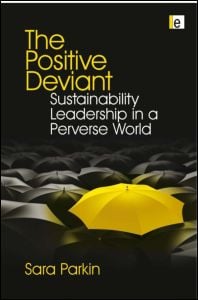
Sustainabilty leadership in a perverse world (book)

The Positive Deviant
An economy low in carbon and high in life satisfaction will require thousands, if not millions of exceptional leaders. This book is the first to bring together sustainability knowledge with the leadership skills and tools to help you become one of those leaders. In it you will find everything you need to get started straight away, and to grow your effectiveness, even in a world that remains perversely intent on the opposite.Connecting cities and oceans (book)
Blue Urbanism

The consequences of our emotional disconnect from oceans have been severe: the marine ecosystems that make up 70% of our planet are imperiled as never before. Restoring the integrity of the oceans will require unprecedented effort, but Blue Urbanism highlights the promise of urban areas around the world that have begun to prioritize marine health, such as efforts to discover the amazing marine biodiversity near cities, new prototypes of wind- and solar-powered shipping vessels, urban aquaponics systems and buildings and parks that connect with the ocean visually and structurally. This book offers an impassioned argument for the need to harness the political, economic, and emotional power of our growing cities to benefit the ocean, offering a comprehensive look at the challenges and great potential for urban areas to integrate ocean health into their policy and planning goals.
Addressing water scarcity (book)
Chasing Water: A Guide for Moving from Scarcity to Sustainability
Water scarcity is spreading and intensifying in many regions of the world, with dire consequences for local communities, economies, and freshwater ecosystems. Current approaches tend to rely on policies crafted at the state or national level, which on their own have proved insufficient to arrest water scarcity. To be durable and effective, water plans must be informed by the culture, economics, and varied needs of affected community members. Chasing Water tells a cohesive story that sustainable water sharing in the twenty-first century can only happen through open, democratic dialogue and local collective action.Why we should conserve carnivores (book)
The Carnivore Way: Coexisting with and Conserving North America's Predators
What would it be like to live in a world with no predators roaming our landscapes? Would their elimination, which humans have sought with ever greater urgency in recent times, bring about a pastoral, peaceful human civilization? Or in fact is their existence critical to our own, and do we need to be doing more to assure their health and the health of the landscapes they need to thrive?Cartoon introduction to climate change (book)
The Cartoon Introduction to Climate Change
Climate change is no laughing matter—but maybe it should be. The topic is so critical that everyone, from students to policy-makers to voters, needs a quick and easy guide to the basics. The Cartoon Introduction to Climate Change entertains as it educates, delivering a unique and enjoyable presentation of mind-blowing facts and critical concepts.Wednesday, 18 June 2014
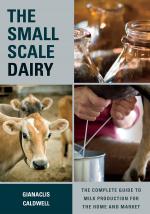
Creating a small dairy business (book)
The Small-Scale Dairy includes everything you need to know in order to successfully produce nourishing, healthy, farm-fresh milk. Whether for home use, direct sale to the consumer, or sale to an artisanal cheesemaker, high- quality raw milk is a delicate, desirable product.
Applicable to keepers of cows, goats, or sheep, The Small-Scale Dairy offers a holistic approach that explores the relationships between careful, conscientious management and the production of safe, healthy, and delicious milk.
Included are options for designing a well-functioning small dairy, choosing equipment, and understanding myriad processes—such as the use of low-temperature pasteurization where raw milk sales are prohibited. Whether you have a one-cow home dairy, a fifty-goat operation, or are simply a curious consumer, The Small-Scale Dairy is an accessible and invaluable resource for achieving your goals.
The
Small-Scale Dairy
The Complete Guide to Milk Production for the Home and Market - See more
at:
http://www.chelseagreen.com/bookstore/item/the_smallscale_dairy:paperback#sthash.5qZ4gfxu.dpuf
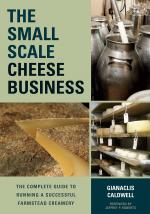
Creating a small cheese business (book)
The Small-Scale Cheese Business: The Complete Guide to Running a Successful Farmstead Creamery
There has never been a better time to be making and selling great cheese. People worldwide are consuming more high- quality, handmade cheese than ever before. The number of artisan cheesemakers has doubled in recent years, and many of the industry’s newcomers are “farmstead” producers—those who work only with the milk of their own animals. Drawing from her own and other cheesemakers’ experiences, the author brings to life the story of creating a successful cheesemaking business in a practical, organized manner. Absolutely essential for anyone interested in becoming a licensed artisan cheesemaker, The Small-Scale Cheese Business will also appeal to the many small and hobby-farm owners who already have milking animals and who wish to improve their home dairy practices and facilities.The Small-Scale Cheese Business
The Complete Guide to Running a Successful Farmstead Creamery
by Gianaclis Caldwell
Few career choices lead to such extremes of labor, emotion, and monetary challenge. In The Small-Scale Cheese Business, (originally published as The Farmstead Creamery Advisor in 2010) respected cheesemaker, instructor, and speaker Gianaclis Caldwell walks would-be producers through the many, and often confusing, steps and decisions they will face when considering a career in this burgeoning cottage industry. This book fills the gap that exists between the pasture and cheese plate. It goes far beyond issues of caring for livestock and basic cheesemaking, explaining business issues such as:
- Analyzing your suitability for the Description Prelim/Final Preliminary career;
- Designing and building the cheese facility;
- Sizing up the market;
- Negotiating day-to-day obstacles;
- Ensuring maximum safety and efficiency.
- See more at: http://www.chelseagreen.com/bookstore/item/the_smallscale_cheese_business:paperback#sthash.nz9gPWbV.dpuf
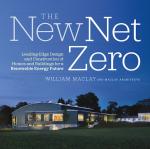
Net zero energy building (book)
The
New Net Zero
Leading-Edge Design and Construction of Homes and Buildings for a
Renewable Energy Future - See more at:
http://www.chelseagreen.com/bookstore/item/the_new_net_zero:hardcover#sthash.XU2d0nim.dpuf
The new threshold for green building is not just low energy, it’s
net-zero energy. In The New Net Zero, sustainable architect
Bill Maclay charts the path for designers and builders interested in
exploring green design’s new frontier. Designers and builders will find a wealth of state-of-the-art information on such considerations as:
- air, water, and vapor barriers;
- embodied energy;
- residential and commercial net- zero standards;
- monitoring and commissioning;
- insulation options;
- costs;
- and more.
The
New Net Zero
Leading-Edge Design and Construction of Homes and Buildings for a
Renewable Energy Future - See more at:
http://www.chelseagreen.com/bookstore/item/the_new_net_zero:hardcover#sthash.XU2d0nim.dpuf
Build topsoil to stop climate change (book)
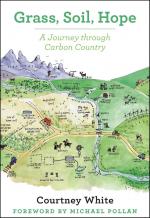
Grass, Soil, Hope A Journey Through Carbon Country
The quick answers are: Build topsoil. Fix creeks. Eat meat from pasture-raised animals. Soil scientists maintain that a mere 2 percent increase in the carbon content of the planet’s soils could offset 100 percent of all greenhouse gas emissions going into the atmosphere. But how could this be accomplished? What would it cost? Is it even possible?
Yes, says author Courtney White, it is not only possible, but essential for the long- term health and sustainability of our environment and our economy. Soil is a huge natural sink for carbon dioxide. If we can draw increasing amounts carbon out of the atmosphere and store it safely in the soil then we can significantly address all the multiple challenges that now appear so intractable.
Grass, Soil, Hope
A Journey Through Carbon Country
Where
people are fighting climate change and growing food with pasture
cropping, permaculture, wetland restoration, rooftop farms, biodiesel,
beer, and sweaty dancing.
This book tackles an increasingly crucial question: What can we do about the seemingly intractable challenges confronting all of humanity today, including climate change, global hunger, water scarcity, environmental stress, and economic instability?
The quick answers are: Build topsoil. Fix creeks. Eat meat from pasture-raised animals. Soil scientists maintain that a mere 2 percent increase in the carbon content of the planet’s soils could offset 100 percent of all greenhouse gas emissions going into the atmosphere. But how could this be accomplished? What would it cost? Is it even possible?
Yes, says author Courtney White, it is not only possible, but essential for the long- term health and sustainability of our environment and our economy.
Right now, the only possibility of large-scale removal of greenhouse gases from the atmosphere is through plant photosynthesis and related land-based carbon sequestration activities. These include a range of already existing, low- tech, and proven practices: composting, no-till farming, climate-friendly livestock practices, conserving natural habitat, restoring degraded watersheds and rangelands, increasing biodiversity, and producing local food.
In Grass, Soil, Hope, the author shows how all these practical strategies can be bundled together into an economic and ecological whole, with the aim of reducing atmospheric CO2 while producing substantial co- benefits for all living things. Soil is a huge natural sink for carbon dioxide. If we can draw increasing amounts carbon out of the atmosphere and store it safely in the soil then we can significantly address all the multiple challenges that now appear so intractable.
- See more at: http://www.chelseagreen.com/bookstore/item/grass_soil_hope:paperback#sthash.fv33yYXv.dpuf
This book tackles an increasingly crucial question: What can we do about the seemingly intractable challenges confronting all of humanity today, including climate change, global hunger, water scarcity, environmental stress, and economic instability?
The quick answers are: Build topsoil. Fix creeks. Eat meat from pasture-raised animals. Soil scientists maintain that a mere 2 percent increase in the carbon content of the planet’s soils could offset 100 percent of all greenhouse gas emissions going into the atmosphere. But how could this be accomplished? What would it cost? Is it even possible?
Yes, says author Courtney White, it is not only possible, but essential for the long- term health and sustainability of our environment and our economy.
Right now, the only possibility of large-scale removal of greenhouse gases from the atmosphere is through plant photosynthesis and related land-based carbon sequestration activities. These include a range of already existing, low- tech, and proven practices: composting, no-till farming, climate-friendly livestock practices, conserving natural habitat, restoring degraded watersheds and rangelands, increasing biodiversity, and producing local food.
In Grass, Soil, Hope, the author shows how all these practical strategies can be bundled together into an economic and ecological whole, with the aim of reducing atmospheric CO2 while producing substantial co- benefits for all living things. Soil is a huge natural sink for carbon dioxide. If we can draw increasing amounts carbon out of the atmosphere and store it safely in the soil then we can significantly address all the multiple challenges that now appear so intractable.
- See more at: http://www.chelseagreen.com/bookstore/item/grass_soil_hope:paperback#sthash.fv33yYXv.dpuf
Wednesday, 30 April 2014
Edible perennials in small spaces (book)
Edible Perennial Gardening: Growing Successful Polycultures in Small Spaces
Do you dream of a low maintenance perennial garden? One that is full to the brim of perennial vegetables that you don’t have to keep replanting, but only have a small space?Do you struggle with too little time for gardening or controlling the pests and diseases that eat your crops? Do you want to grow unusual vegetable varieties? You can do all of this with Edible Perennial Gardening. Anni Kelsey explains how to source and propagate different vegetables, which plants work well together in a polycultures, and what you can plant in small, shady or semi-shady beds as well as in sunny areas.
Everything you need to know about getting started in growing your own food in a low maintenance perennial garden.
Do you dream of a low-maintenance perennial garden that is full to the brim of perennial vegetables that you don’t have to keep replanting, but have only a small space? Do you want a garden that doesn’t take much of your time and that needs little attention to control the pests and diseases that eat your crops? Do you want to grow unusual vegetable varieties? You can have all of this with Edible Perennial Gardening. Anni Kelsey has meticulously researched the little-known subject of edible perennials and selected her favorite, tasty varieties. She explains how to source and propagate different vegetables, which plants work well together in polycultures, and what you can plant in small, shady, or semi shady beds, as well as in sunny areas.
- See more at: http://www.chelseagreen.com/bookstore/item/edible_perennial_gardening:paperback#sthash.lWEhoRQk.dpuf
Do you dream of a low-maintenance perennial garden that is full to the brim of perennial vegetables that you don’t have to keep replanting, but have only a small space? Do you want a garden that doesn’t take much of your time and that needs little attention to control the pests and diseases that eat your crops? Do you want to grow unusual vegetable varieties? You can have all of this with Edible Perennial Gardening. Anni Kelsey has meticulously researched the little-known subject of edible perennials and selected her favorite, tasty varieties. She explains how to source and propagate different vegetables, which plants work well together in polycultures, and what you can plant in small, shady, or semi shady beds, as well as in sunny areas.
- See more at: http://www.chelseagreen.com/bookstore/item/edible_perennial_gardening:paperback#sthash.lWEhoRQk.dpuf
Gardening myths dispelled (book)
Gardening Myths and Misconceptions
Some mythical beliefs run deep into the collective unconscious and once ingrained as “certain facts” in the public domain, they are difficult to question, even when they contain contradictions or are demonstrably untrue. There are many such beliefs in gardening, some with discernible origins in history, some which have established for no obvious reason. In this book Charles Dowding is asking questions, because mythical beliefs hide methods of easier working, for better results.Fly less but stay connected (book)
Beyond Flying: Rethinking air travel in a globally connected world
Fourteen authors from around the world share their stories about how they came to the conclusion that reducing their air travel was necessary to avoid playing their part in climate change, and how they changed values and attitudes to businesses and personal travel. These are the stories of how these remarkable people found easy and better ways of living and working in a globalised world with less air travel.
Monday, 31 March 2014
Gardening after catastrophe (book)
Greening in the Red Zone
‘Greening in the red zone’ refers to post-catastrophe, community-based stewardship of nature, and how these often spontaneous, local stewardship actions serve as a source of social-ecological resilience in the face of severe hardship. Two types of evidence are presented in this book. First are explanations on the positive impact of contact with nature, and from resilience scholars who subscribe to the notion that identifying sources of resilience in the face of change is crucial to the long-term well-being of humans, their communities, and the environment. The second source of evidence are case studies of greening in red zones from post-disaster and post-conflict settings around the world, ranging from the highly visible like the greening of the Berlin Wall, to smaller-scale efforts like planting a community garden in a war zone.Tuesday, 25 February 2014
Successful organic market gardening (book)
The Market Gardener: A successful grower's handbook for small-scale organic farming
Jean-Martin Fortier is the founder of a micro-farm in Eastern Quebec. Growing on just 1.5 acres, they feed more than 200 families through their thriving CSA and seasonal market stands. In this book he shares the secret of their success: low-tech, high-yield production methods that focus on growing better rather than growing bigger, making their operation more lucrative and viable in the process. Instead of a tractor they opted to stay small-scale, relying on hand and light power tools. The book is a compendium of proven horticultural techniques and innovative growing methods, packed with practical information.
Thursday, 30 January 2014
Edible permaculture for back gardens (book)
Edible Landscaping with a Permaculture Twist: How to Have Your Yard and Eat it Too
This is a how-to manual for the budding gardener and experienced green thumb alike, full of creative and easy-to-follow designs that guide you to having your yard and eating it, too.
With the help of more than 200 beautiful color photos and drawings, permaculture designer and avid grower Michael Judd takes the reader on a step-by-step process to transform a sea of grass into a flourishing edible landscape that pleases the eye as well as the taste buds. With personality and humour, he translates the complexities of permaculture design into simple self-build projects, providing full details on the evolving design process, material identification, and costs.
Friday, 17 January 2014
Communicating science to the public (book)
Escape from the Ivory Tower
Maybe you're an absolute novice in communicating with the press or
with
public officials... or maybe you're a seasoned veteran with horror
stories about being misquoted, or having your research reduced to an
oversimplified blurb. This frank, practical, and entertaining guide explains how
to engage your audience and explain why a particular finding matters.
The book includes advice from journalists, decision-makers, new media
experts, bloggers, and some of the thousands of scientists who have
participated in the author's communication workshops.
Subscribe to:
Posts (Atom)