
Showing posts with label design. Show all posts
Showing posts with label design. Show all posts
Thursday, 21 July 2016
Permaculture your life (book)
How to Permaculture Your Life: Strategies, Skills and Techniques for the Transition to a Greener World by Ross Mars
This book is a great resource for everyone interested in Transition, permaculture and more self-reliant and satisfying lifestyles.
It is packed with information on permaculture design principles, soil building, nutrient-dense food growing, including top plant and tree selections for all climatic zones.
Coverage extends to rainwater harvesting and irrigation, human waste management, and strategies for rural properties plus a unique focus on applying permaculture to small urban spaces.
Also covered are hand tools, food preservation, energy production, and low-carbon housing and a plethora of nearly forgotten skills such as soap making, basket weaving, seed saving, and rope and candle making, and more

Wednesday, 18 June 2014
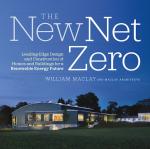
Net zero energy building (book)
The
New Net Zero
Leading-Edge Design and Construction of Homes and Buildings for a
Renewable Energy Future - See more at:
http://www.chelseagreen.com/bookstore/item/the_new_net_zero:hardcover#sthash.XU2d0nim.dpuf
Designers and builders will find a wealth of state-of-the-art information on such considerations as:
- air, water, and vapor barriers;
- embodied energy;
- residential and commercial net- zero standards;
- monitoring and commissioning;
- insulation options;
- costs;
- and more.
The
New Net Zero
Leading-Edge Design and Construction of Homes and Buildings for a
Renewable Energy Future - See more at:
http://www.chelseagreen.com/bookstore/item/the_new_net_zero:hardcover#sthash.XU2d0nim.dpuf
Farmer designed organic systems (#journal)
Farmers and agronomists design new biological agricultural practices for organic cropping systems in France

Intro to system science and permaculture (online)
Thinking Systematically: Achieving Sustainable Systems
A simple introduction to systems science and its links to permaculture:
A simple introduction to systems science and its links to permaculture:
- Systems science provides a means of analyzing and understanding complex processes based on a few basic principles
- Complex systems behave in complex ways and may change over time
- When problems emerge there is an underlying positive feedback loop that may not be evident
- Such problems cannot be solved using linear causality thinking
- True sustainability involves whole systems thinking and design
- Permaculture is the application of systems thinking to the design of living arrangements
Shelter belt design guide (online)
The Principles of Using Woods for Shelter
This Information Note describes the physical principles that determine the impact of woodlands on shelter provision. The importance of the woodland height, porosity, width, length, orientation and shape on the area and level of shelter are discussed. Three generic shelter wood types are identified (‘windshield’, ‘windbreak’ and ‘hybrid’) together with their most
appropriate applications. The Note points to the crucial need to understand the reasons for creating shelter in order to determine the most effective design.
This Information Note describes the physical principles that determine the impact of woodlands on shelter provision. The importance of the woodland height, porosity, width, length, orientation and shape on the area and level of shelter are discussed. Three generic shelter wood types are identified (‘windshield’, ‘windbreak’ and ‘hybrid’) together with their most
appropriate applications. The Note points to the crucial need to understand the reasons for creating shelter in order to determine the most effective design.
Tuesday, 15 April 2014
Introduction to soil health principles (video)
'The Soil is naked, hungry and running a fever!'
Ray Archuleta, a conservation agronomist with the National Resource Conservation Service, spoke at the National Conference on Soil and Cover Crops in Omaha this year. Ray delivered an authoritative and inspirational address to the conference about agroecology and the importance of holistic design in landscape management. You can watch a 25 minute video of his presentation here.Thursday, 30 January 2014
Edible permaculture for back gardens (book)
Edible Landscaping with a Permaculture Twist: How to Have Your Yard and Eat it Too
This is a how-to manual for the budding gardener and experienced green thumb alike, full of creative and easy-to-follow designs that guide you to having your yard and eating it, too.
With the help of more than 200 beautiful color photos and drawings, permaculture designer and avid grower Michael Judd takes the reader on a step-by-step process to transform a sea of grass into a flourishing edible landscape that pleases the eye as well as the taste buds. With personality and humour, he translates the complexities of permaculture design into simple self-build projects, providing full details on the evolving design process, material identification, and costs.
Tuesday, 22 January 2013
Aesthetics in green design (book)
Tuesday, 15 January 2013
Permaculture Design by Aranya (book)
Permaculture Design

This
book gives you everything you need to apply permaculture garden
design. It links theory to practice and places the ethics,
philosophies, tools and techniques directly into the context of the
design process itself. The book is based on Aranya's own teaching
resources for the Permaculture Design Course and provides a clear,
easy to use manual for the entire garden design process.
Subscribe to:
Posts (Atom)