We are no longer updating the Research Digest. All content remains.
The Permaculture Research Digest has summaries of newly published permaculture-related research. All items are
hyper-linked to the original publication.
The 'January 2013' archive contains 60 items published in 2012.
Items marked with a # have restricted public access, although abstracts are freely available.
Permaculture Research Digest
Showing posts with label farming. Show all posts
Wednesday, 14 September 2016
Crop-livestock integration betwen farms (#journal)
Crop–livestock integration beyond the farm level: a review
Paradoxically, the number of crop–livestock farms is declining across Europe, despite the fact that crop-livestock farms are optimal to the sustainability of agriculture. To solve this issue, crop–livestock integration may be organized beyond the farm level. For instance, local groups of farmers can negotiate land-use allocation patterns and exchange materials such as manure, grain, and straw. Development of such a collective agricultural system raises questions about how to integrate crops and livestock among farms, and the consequences, impacts, and conditions of integrating them. This article reviews the different forms of crop–livestock integration beyond the farm level, their potential benefits, and the features of decision support systems (DSS) needed for the integration process.
Labels:
agriculture,
crops,
farming
Friday, 1 July 2016
Agriculture and aquaculture combat rising sea levels (news report)
Bangladesh agriculture adapts to sea-level rise
A continuous influx of sea water is threatening agriculture and food security in vast coastal areas of Bangladesh, but farmers are finding ways to adapt, like cultivating fish and crops at the same time.
The coastal and offshore areas of this low-lying, densely populated country include tidal estuaries and river floodplains in the south along the Bay of Bengal. Here the arable land is about 30 percent of the total available in the country.
According to salinity survey findings, about one million hectares, or about 70 percent of cultivated lands of the southern coastal areas of Bangladesh, are affected by various degrees of soil salinity.
It is already predicted that if the current trend of climate change continues, rice production could fall by 10 percent and wheat by 30 percent.
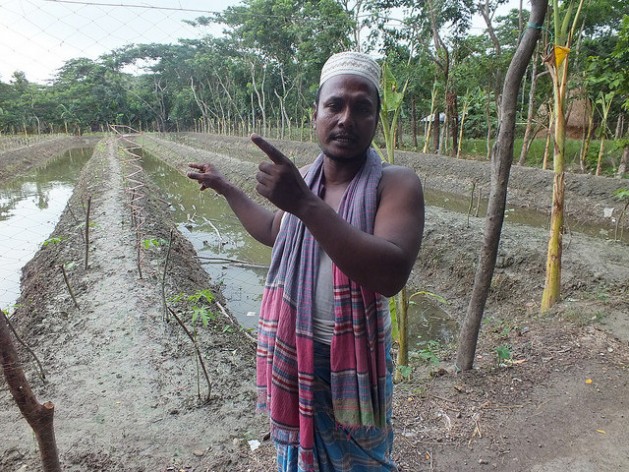
Coastal Integrated Technology Extension Programme (CITEP) encourages farmers to use the Sarjan model of long raised rows of soil about one metre wide and 90 cm high for cultivating varieties of vegetables. The trenches between the rows are filled with water into which various types of fish are released for maturing. The water for irrigating the plants comes from nearby lakes filled with freshwater drawn from the Meghna River.
The advantage of using Sarjan model is that it protects cropland from inundation during storm surges, tidal waves and flash flooding and avoids high salinity.
The new farming practice has turned out to be very popular in Char Fasson, where over 9,000 farmers are now using the model. Many farmers have also formed self-help groups where members benefit from sharing each others’ experiences.
Reflections
Is this a permaculture-allied solution? Could it be used elsewhere?
Are you doing permaculture in this region? If so, we'd love to hear more about it. Please get in touch with Naomi on international@permaculture.org.uk
Thursday, 30 June 2016
Ernst Gotsch's carbon farm (video)
Life in Syntropy: The story of a transformation
“Life in Syntropy” is a short film that was screened at the Paris climate talks. It tells the story of Brazilian farmer Ernst Gotsch, who bought 1,200 acres of completely deforested land on the edge of the rainforest in 1984 and transformed it into a remarkably biodiverse farm that reverses climate change by sequestering carbon.
Labels:
biodiversity,
climate change,
farming
Wednesday, 29 June 2016
African technique transforms soil fertility
700-year-old West African soil technique could help mitigate climate change
A 700-year-old fertile soil technique could mitigate climate change and revolutionize farming across Africa, say researchers. They discovered that the ancient West African method of adding charcoal and kitchen waste to highly weathered, nutrient poor tropical soils can transform the land into enduringly fertile, carbon-rich black soils which the researchers dub 'African Dark Earths'.
Labels:
africa,
climate change,
farming
Thursday, 26 May 2016
Integrated farming gives productivity AND ecosystems (#journal)
Soil functions and ecosystem services in conventional, conservation, and integrated agricultural systems. A review
This study reviewed relevant bibliography and then developed a simple conceptual model, in which soil functions and ecosystem services were compared between conventional, conservation, and integrated agricultural systems. The overall agro-environmental score was largest for conservation systems (71.9 %), intermediate for integrated systems (68.8 %), and smallest for conventional systems (52.1 %). But the crop yield productivity score was largest for integrated systems (83.3 %), intermediate for conventional systems (66.7 %), and smallest for conservation systems (58.3 %). This study shows the potential of integrated farming systems in global food security while sustaining environmental quality.
Labels:
farming,
global food system,
soil
Bio-integrated farming (book)
The Bio-Integrated Farm is a must-read, twenty-first-century
manual for managing natural resources and brings system farming
and permaculture to a whole new level. Jadrnicek’s groundbreaking insights into permaculture go beyond the
term’s philosophical foundation to create hardworking farm-scale
designs. Jadrnicek’s
components serve at least seven functions. With every additional function
that a component performs, the design becomes more advanced and saves
even more energy. A bio-integrated greenhouse, for example, doesn’t just extend the season
for growing vegetables; it also serves as a rainwater collector, a pond
site, an aquaponics system, and a heat generator.
Labels:
farming,
permaculture,
sustainable design
Feeding India without pesticides (journal)
This Review article is a genuine attempt to evaluate the
possibilities of the negligible use of pesticides in agriculture in
India. Though India is among the least
users of pesticides, even then for the sustainable agricultural output
there are the possibilities of alternative agricultural practices.
Moreover, the authorities are not so serious about this
subject therefore the modern technologies are not being welcomed for
agro-ecology. This article is based upon the secondary data available in the published
reports. The article will conclude that the inclusive growth
in agriculture is the need of the hour in India. It is argued that the
alternative agriculture must be adopted for the overall welfare of
future of the humanity.
Labels:
agriculture,
farming
Friday, 6 May 2016
Agro-ecology in Zimbabwe (report)
This research report is the first piece of research being conducted in Zimbabwe by the African Centre for Biodiversity (ACB). It forms part of a regional research programme which aims to engage directly with farmers, farmer associations, farmer support organisations, extension workers, scientists, donors and government officials, to explore the complex impacts on small-scale farming households of the introduction of Green Revolution technologies, as well as their socio-ecological contexts in the region.
Labels:
africa,
agro-ecology,
farming,
government
Getting access to growing land in Europe (video)
The Land for our Food
This documentary movie takes us on the journey of Gavin Bridger, a grower from a Community Supported Agriculture project in England, through various European countries in his quest of accessing land for agroecological farming. All over Europe the difficulty to find suitable and affordable land is posing a great barrier to the development of sustainable and often small-scale agriculture. Gavin meets some of the initiatives from the Access to Land network, and also meets farmers and journalists to better understand the scope and historical roots of access to land issues.
Labels:
agro-ecology,
farming,
land ownership
Wednesday, 16 July 2014
Organic food is better for you (journal)
This study analyzes 343 peer-reviewed publications that indicate
statistically significant differences in composition
between organic and non-organic crops/ foods. The concentrations of a range of antioxidants
were found to be substantially higher in organic crops. Many of these compounds have been linked to a reduced risk of chronic diseases
and certain cancers. Additionally, the occurrence of pesticide residues
was found to be four times higher in conventional crops, which also
contained significantly higher concentrations of the toxic metal cadmium. Significant differences were also detected for some other minerals and vitamins.
Scaling up agro-ecology (online)
Overcoming Obstacles to Agroecology
A half-century of research and practice in agroecology has
yielded spectacular results for hundreds of thousands of small scale farmers around the world. Because it
opens possibilities for grassroots food systems transformation, peasant
movements for food sovereignty have embraced agroecology, as have many
urban and organic farmers in the Global North. But despite its
documented benefits, agroecology is still largely limited to localized
experiences and a few, poorly funded university programs. The problem is
systemic. The solution is social and political, as discussed in this article from The Huffington Post.
Scientists call for agroecology research (online)
Scientists Call for Public Investment in Agroecological Research
A distinguished group of scientists and experts from universities and colleges across the United States—including land-grant universities in agricultural powerhouse states such as Iowa and California—has launched the following statement calling for increased public investment in agroecological research. Their statement describes agroecological methods as productive, profitable and sustainable.
Wednesday, 9 July 2014
Adoption of conservation agriculture in Malawi (#journal)
Adoption and extent of conservation agriculture practices among smallholder farmers in Malawi
Understanding factors affecting farmers' adoption of improved technologies is critical to success of conservation agriculture (CA). This study explored why farmers adopted the three principles of CA (minimum soil disturbance, permanent soil cover, and crop rotations), in 10 communities in Malawi. From a total of 15,854 households in the study areas, 18% of smallholders had adopted CA, on 2.1% of all cultivated land. The first stage of the research showed that hired labor, area of land cultivated, membership to farmer group, and district influenced farmers' decisions to adopt CA. The second stage suggested that total cultivated land, duration of practicing CA, and district influenced farmers' decisions. Agency and social structures influenced adoption and extent of CA. Future policy should address ways to provide access to information and long-term support to farmers to enable them to embrace the technology fully.Land use practices to improve water quality (#journal)
Estimating water quality effects of conservation practices and grazing land use scenarios
Conservation management practices such as reduced tillage, fertilizer management, and buffer strips are well-established means by which to control erosion and nutrient losses from fields planted in annual row crops. However, agricultural systems which include perennial plant cover may represent an alternative way to reduce these losses. In this study, management intensive rotational grazing (MIRG) was tested as a means by which to improve water quality on highly vulnerable row crop land, compared to more traditional conservation management schemes in Southeastern Minnesota. The effects of both sets of alternative scenarios were evaluated with a watershed-based modeling approach using the Soil and Water Assessment Tool. Watershed-wide implementation of all conservation management practices resulted in reductions in sediment (52%) and total P (28%) loads.
No till cropping cools the hottest days (#journal)
Preferential cooling of hot extremes from cropland albedo management
The projected increase in warm extremes associated with climate change is a major concern for society and represents a threat to humans and ecosystems. This study shows that heat wave impacts could be attenuated locally by increasing surface albedo through no-till farming. This is due to an identified asymmetric impact of surface albedo change on summer temperature distribution resulting in a much stronger influence on hot extremes than on mean temperatures. This finding has important implications for the development of sustainable land management strategies and for the design of climate-engineering measures acting upon high-impact climate extremes.Social care farming (#journal)
Farming with care: the evolution of care farming in the Netherlands
The aim of this paper is to describe the evolution of the care farming sector in one of its pioneering countries, the Netherlands. Care farms combine agricultural production with health and social services. The number of care farms, and the legitimacy and diversity of the care farming sector, have increased rapidly over time due to changes in the care regime, increased media exposure, contacts with ministries and politicians, and the development of a quality system have contributed to the legitimacy of the sector. Changes in the care regime and collective action promoted a further expansion of the sector. The article sheds light on changes in agriculture and transsectoral collaboration.Legume/corn intercropping - weeds (#journal)
Baby Corn-Legumes Intercropping System: II Weed Dynamics and Community Structure
Field experiments were conducted by Indian Statistical Institute on sandy loam soil. Randomized block design was followed to study the performance of sole and intercrops of legumes (Chickpea, Pea, Groundnut, Lentil) with baby corn in 2:1 (one row of legume planted in between of baby corn rows) and 2:2 (two rows of legume planted in between of baby corn rows) systems. Intercrops suppress weeds growth and population more than their respective sole crop. The intercropping systems of pea or chickpea with baby corn were most suppressive of weeds. The 2:2 row arrangement appeared to be the most weed competitive row arrangement. Intercropping of legumes suppressed the emergence of the most troublesome weeds in the study.Wednesday, 18 June 2014
Creating a small dairy business (book)
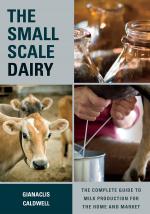
The Small-Scale Dairy includes everything you need to know in order to successfully produce nourishing, healthy, farm-fresh milk. Whether for home use, direct sale to the consumer, or sale to an artisanal cheesemaker, high- quality raw milk is a delicate, desirable product.
Applicable to keepers of cows, goats, or sheep, The Small-Scale Dairy offers a holistic approach that explores the relationships between careful, conscientious management and the production of safe, healthy, and delicious milk.
Included are options for designing a well-functioning small dairy, choosing equipment, and understanding myriad processes—such as the use of low-temperature pasteurization where raw milk sales are prohibited. Whether you have a one-cow home dairy, a fifty-goat operation, or are simply a curious consumer, The Small-Scale Dairy is an accessible and invaluable resource for achieving your goals.
The
Small-Scale Dairy
The Complete Guide to Milk Production for the Home and Market - See more
at:
http://www.chelseagreen.com/bookstore/item/the_smallscale_dairy:paperback#sthash.5qZ4gfxu.dpuf
Creating a small cheese business (book)
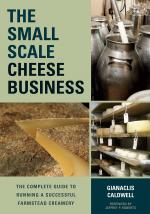
The Small-Scale Cheese Business: The Complete Guide to Running a Successful Farmstead Creamery
There has never been a better time to be making and selling great cheese. People worldwide are consuming more high- quality, handmade cheese than ever before. The number of artisan cheesemakers has doubled in recent years, and many of the industry’s newcomers are “farmstead” producers—those who work only with the milk of their own animals. Drawing from her own and other cheesemakers’ experiences, the author brings to life the story of creating a successful cheesemaking business in a practical, organized manner. Absolutely essential for anyone interested in becoming a licensed artisan cheesemaker, The Small-Scale Cheese Business will also appeal to the many small and hobby-farm owners who already have milking animals and who wish to improve their home dairy practices and facilities.The Small-Scale Cheese Business
The Complete Guide to Running a Successful Farmstead Creamery
by Gianaclis Caldwell
Few career choices lead to such extremes of labor, emotion, and monetary challenge. In The Small-Scale Cheese Business, (originally published as The Farmstead Creamery Advisor in 2010) respected cheesemaker, instructor, and speaker Gianaclis Caldwell walks would-be producers through the many, and often confusing, steps and decisions they will face when considering a career in this burgeoning cottage industry. This book fills the gap that exists between the pasture and cheese plate. It goes far beyond issues of caring for livestock and basic cheesemaking, explaining business issues such as:
- Analyzing your suitability for the Description Prelim/Final Preliminary career;
- Designing and building the cheese facility;
- Sizing up the market;
- Negotiating day-to-day obstacles;
- Ensuring maximum safety and efficiency.
- See more at: http://www.chelseagreen.com/bookstore/item/the_smallscale_cheese_business:paperback#sthash.nz9gPWbV.dpuf
Subscribe to:
Comments (Atom)