We are no longer updating the Research Digest. All content remains.
The Permaculture Research Digest has summaries of newly published permaculture-related research. All items are
hyper-linked to the original publication.
The 'January 2013' archive contains 60 items published in 2012.
Items marked with a # have restricted public access, although abstracts are freely available.
Permaculture Research Digest
Wednesday, 28 October 2015
Sustainable land management (report)
The value of land: Prosperous lands and positive rewards through sustainable land management
The Economics of Land Degradation (ELD) Initiative is an international collaboration that provides a global assessment of the economics of land degradation, and highlights the benefits of sustainable land management. Working with a team of scientists, practitioners, policy-/decisionmakers, and all interested stakeholders, the Initiative endeavours to provide a scientifically robust, politically relevant, and socio-economically considerate approach that is economically viable and rewarding.
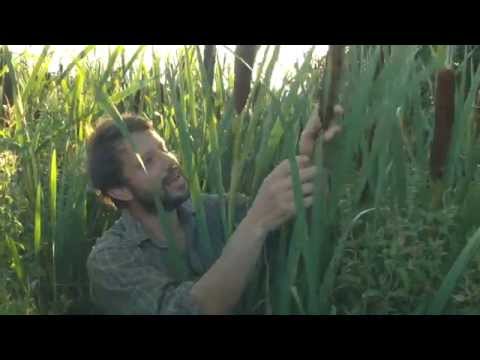
Living with the Land 9) Foraging (video)
Living With The Land | Part 9 | 21st Century Foraging
Wild food experimentalist Fergus Drennan has been foraging for over 25 years. By following the traditions of foraging for wild foods, medicinals and building materials, we can reconnect with our landscapes, learning to live in tune with nature. Fergus brings this tradition into the modern world through his experimental techniques such as making paper from bracket mushrooms and syrups from bullrushes. Fergus shows some common, yet wonderful plants that are not only edible, but are tasty and healthy. Introduced by Bruce Parry, presenter of the BBC series 'Tribe'.
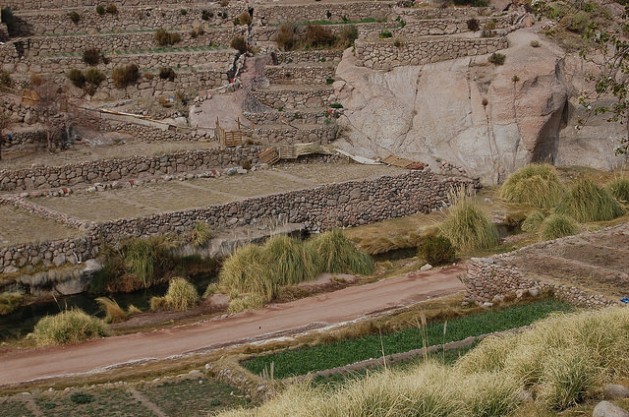
Terraced farming in the Andes (online)
Terrace Farming – an Ancient Indigenous Model for Food Security
Terrace farming as practiced from time immemorial by native peoples in the Andes mountains contributes to food security as a strategy of adaptation in an environment where the geography and other conditions make the production of nutritional foods a complex undertaking.
Monday, 26 October 2015
8 principles of IPM (#journal)
Eight principles of integrated pest management
There is a need to design cropping systems less dependent on synthetic pesticides. Consequently, the European Union requires the application of eight principles of Integrated Pest Management. Here, we propose to farmers, advisors, and researchers a dynamic and flexible approach that accounts for the diversity of farming situations and the complexities of agroecosystems and that can improve the resilience of cropping systems and our capacity to adapt crop protection to local realities.
Roof top gardens in Italy (#journal)
Techniques and crops for efficient rooftop gardens in Bologna, Italy
Urban rooftop farming favours local food production. Although rooftop farming is perceived as a sustainable system, there is a lack of quantitative studies. Researchers in a community rooftop garden in Bologna, Italy, grew lettuce, tomato, chilli pepper, eggplant, melon and watermelon. Data was analysed by life cycle assessment for environmental and economic performance. Eggplants and tomatoes showed the best environmental performances of about 74 g CO2 per kg. Eggplant production in soil was cheapest at 0.13 € per kg.
Agricultural instensifcation - what does it mean? (#journal)
The blurred boundaries of ecological, sustainable, and agroecological intensification: a review
It is neither clear nor agreed upon what is meant by agricultural intensification. This article compares the three major uses, ‘ecological intensification’, ‘sustainable intensification’ and ‘agroecological intensification’, by analysing their various definitions, principles and practices. Confusion is still predominant in the use of these terms, contributing to their use for justifying many different kinds of practices and interventions. Greater precision in defining the terms and the respective practices proposed would indicate more clearly what authors are aiming at with the proposed intensification.
Subscribe to:
Posts (Atom)