Gardens and health. Implications for policy and practice
This independent report by The King's Fund has three aims:
1) to collate and summarise the evidence on the impact of gardens on wellbeing
2) to demonstrate the important place gardening interventions have in the wider health and care system
3) to make the case for the further integration of gardens and health into mainstream health policy and practice.
The report includes a ‘menu’ of recommendations that aims to encourage the NHS, government departments, national bodies, local government, health and wellbeing boards and clinical commissioning groups to make more of the diverse health benefits of gardening.
Showing posts with label health. Show all posts
Showing posts with label health. Show all posts
Thursday, 30 June 2016

Wednesday, 15 June 2016
Innovation and research in food and health (Journal, open access until 16th July)
The framing of innovation among European research funding actors: Assessing the potential for ‘responsible research and innovation’ in the food and health domain.
Free access, courtesy of Shumaisa Khan, until 16th July 2016.
Highlights
• Examines framing of innovation among research funding decision makers.
• Innovation perceived to be focused on biosciences and marketable applications.
• Inadequate consideration of normative issue of who defines the problems.
• Shift in framing is necessary to implement responsible research and innovation.
This paper explores how the concept of innovation is understood and used in policy implementation, with a particular focus upon ‘food and health’ science and research policy and funding. Our analysis is based on 55 interviews of various actors engaged in research funding decision-making across eight European countries. Three themes emerged from the analysis: concept of innovation; conditions for innovation; and drivers of innovation; through these themes, the cognitive framing was drawn out.
The cognitive framing suggests that innovation in the food and health domain is perceived to be focused on biosciences and marketable applications to the neglect of social sciences and broader public interest; that the “innovation network” is primarily viewed as centred around scientific/technical and industrial actors; and that the demand-pull dynamic is relevant to innovation in the area of food and health, despite having been relegated in contemporary thinking and policies around innovation. These findings point to the inadequate consideration of the normative issues—how problems are to be defined and addressed—among national research funders in the food and health domain, and indicate a gap between the ideas of innovation under the terms of RRI and innovation as conceptualised by those involved in its governance.
Khan et al., 2016. The framing of innovation among European research funding actors: Assessing the potential for ‘responsible research and innovation’ in the food and health domain. Food Policy, 62, 78-87
Tuesday, 26 April 2016
How British horticulture can feed Britain (report)
Horticulture in the UK: potential for meeting dietary guideline demands

Wednesday, 16 July 2014
Organic food is better for you (journal)

This study analyzes 343 peer-reviewed publications that indicate
statistically significant differences in composition
between organic and non-organic crops/ foods. The concentrations of a range of antioxidants
were found to be substantially higher in organic crops. Many of these compounds have been linked to a reduced risk of chronic diseases
and certain cancers. Additionally, the occurrence of pesticide residues
was found to be four times higher in conventional crops, which also
contained significantly higher concentrations of the toxic metal cadmium. Significant differences were also detected for some other minerals and vitamins.
Wednesday, 9 July 2014
Social care farming (#journal)
Farming with care: the evolution of care farming in the Netherlands

Wednesday, 18 June 2014
Build topsoil to stop climate change (book)
Grass, Soil, Hope A Journey Through Carbon Country
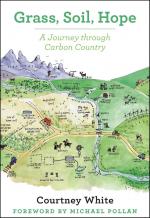
The quick answers are: Build topsoil. Fix creeks. Eat meat from pasture-raised animals. Soil scientists maintain that a mere 2 percent increase in the carbon content of the planet’s soils could offset 100 percent of all greenhouse gas emissions going into the atmosphere. But how could this be accomplished? What would it cost? Is it even possible?
Yes, says author Courtney White, it is not only possible, but essential for the long- term health and sustainability of our environment and our economy. Soil is a huge natural sink for carbon dioxide. If we can draw increasing amounts carbon out of the atmosphere and store it safely in the soil then we can significantly address all the multiple challenges that now appear so intractable.
Grass, Soil, Hope
A Journey Through Carbon Country
Where
people are fighting climate change and growing food with pasture
cropping, permaculture, wetland restoration, rooftop farms, biodiesel,
beer, and sweaty dancing.
This book tackles an increasingly crucial question: What can we do about the seemingly intractable challenges confronting all of humanity today, including climate change, global hunger, water scarcity, environmental stress, and economic instability?
The quick answers are: Build topsoil. Fix creeks. Eat meat from pasture-raised animals. Soil scientists maintain that a mere 2 percent increase in the carbon content of the planet’s soils could offset 100 percent of all greenhouse gas emissions going into the atmosphere. But how could this be accomplished? What would it cost? Is it even possible?
Yes, says author Courtney White, it is not only possible, but essential for the long- term health and sustainability of our environment and our economy.
Right now, the only possibility of large-scale removal of greenhouse gases from the atmosphere is through plant photosynthesis and related land-based carbon sequestration activities. These include a range of already existing, low- tech, and proven practices: composting, no-till farming, climate-friendly livestock practices, conserving natural habitat, restoring degraded watersheds and rangelands, increasing biodiversity, and producing local food.
In Grass, Soil, Hope, the author shows how all these practical strategies can be bundled together into an economic and ecological whole, with the aim of reducing atmospheric CO2 while producing substantial co- benefits for all living things. Soil is a huge natural sink for carbon dioxide. If we can draw increasing amounts carbon out of the atmosphere and store it safely in the soil then we can significantly address all the multiple challenges that now appear so intractable.
- See more at: http://www.chelseagreen.com/bookstore/item/grass_soil_hope:paperback#sthash.fv33yYXv.dpuf
This book tackles an increasingly crucial question: What can we do about the seemingly intractable challenges confronting all of humanity today, including climate change, global hunger, water scarcity, environmental stress, and economic instability?
The quick answers are: Build topsoil. Fix creeks. Eat meat from pasture-raised animals. Soil scientists maintain that a mere 2 percent increase in the carbon content of the planet’s soils could offset 100 percent of all greenhouse gas emissions going into the atmosphere. But how could this be accomplished? What would it cost? Is it even possible?
Yes, says author Courtney White, it is not only possible, but essential for the long- term health and sustainability of our environment and our economy.
Right now, the only possibility of large-scale removal of greenhouse gases from the atmosphere is through plant photosynthesis and related land-based carbon sequestration activities. These include a range of already existing, low- tech, and proven practices: composting, no-till farming, climate-friendly livestock practices, conserving natural habitat, restoring degraded watersheds and rangelands, increasing biodiversity, and producing local food.
In Grass, Soil, Hope, the author shows how all these practical strategies can be bundled together into an economic and ecological whole, with the aim of reducing atmospheric CO2 while producing substantial co- benefits for all living things. Soil is a huge natural sink for carbon dioxide. If we can draw increasing amounts carbon out of the atmosphere and store it safely in the soil then we can significantly address all the multiple challenges that now appear so intractable.
- See more at: http://www.chelseagreen.com/bookstore/item/grass_soil_hope:paperback#sthash.fv33yYXv.dpuf
Monday, 31 March 2014
Biodiversity vital to public health (#journal)
Biological Diversity and Public Health

In the wake of a species extinction event unprecedented in human history, how the variety, distribution, and abundance of life on earth may influence health has gained credence as a worthy subject for research and study at schools of public health and for consideration among policy makers. This article reviews a few of the principal ways in which health depends on biodiversity, including the discovery of new medicines, biomedical research, the provision of food, and the distribution and spread of infections. It also examines how changes in biological diversity underlie much of the global burden of disease and how a more thorough understanding of life on earth and its relationships has the potential to greatly alleviate and prevent human suffering.
Subscribe to:
Posts (Atom)