We are no longer updating the Research Digest. All content remains.
The Permaculture Research Digest has summaries of newly published permaculture-related research. All items are
hyper-linked to the original publication.
The 'January 2013' archive contains 60 items published in 2012.
Items marked with a # have restricted public access, although abstracts are freely available.
Permaculture Research Digest
Showing posts with label biodiversity. Show all posts
Sunday, 31 July 2016
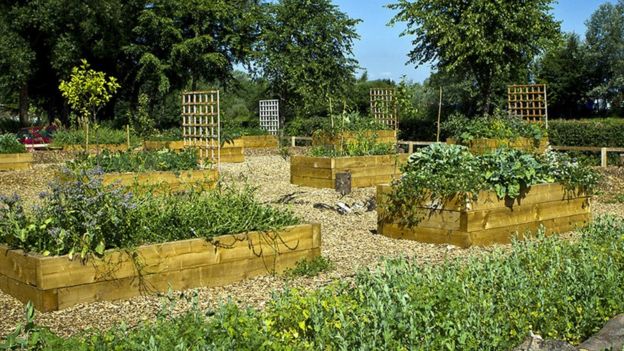
Urban gardens grow food and biodiversity (online)
Labels:
biodiversity,
food,
gardening,
urban
Thursday, 30 June 2016
Ernst Gotsch's carbon farm (video)
Life in Syntropy: The story of a transformation
“Life in Syntropy” is a short film that was screened at the Paris climate talks. It tells the story of Brazilian farmer Ernst Gotsch, who bought 1,200 acres of completely deforested land on the edge of the rainforest in 1984 and transformed it into a remarkably biodiverse farm that reverses climate change by sequestering carbon.
Labels:
biodiversity,
climate change,
farming
Monday, 16 May 2016
Agroecology in the tropics (journal)
The Role of Trees in Agroecology and Sustainable Agriculture in the Tropics
Shifting agriculture in the tropics has been replaced by sedentary smallholder farming on degraded land. To address low yields and low income both, the soil fertility, the agroecosystem functions, and the source of income can be restored by diversification with nitrogen-fixing trees and the cultivation of indigenous tree species. Biodiversity studies indicate that mature cash crop systems, such as cacao and coffee with shade trees, provide wildlife habitat that supports natural predators. This review offers suggestions on how to examine these agroecological processes in more detail for the most effective rehabilitation of degraded land.
Labels:
agriculture,
agro-ecology,
biodiversity,
trees
Monday, 30 June 2014
Introduction to urban wildlife gardening (online)
Even if you live in an apartment, townhouse, or condominium development without much space for landscaping, the right mix of ingredients on a balcony, patio, terrace, or rooftop can be an oasis that provides food and rest for wildlife in an urban concrete desert. Coordinated efforts by neighbors can transform an entire multi-unit building or complex into a thriving urban habitat that is part of a larger living landscape. This leaflet shows you how.
Monday, 12 May 2014
Uk agriculture facts website (online)
UK Agriculture
This web site about agriculture and farming was established in 1999 in an attempt to help widen understanding about the role of agriculture in the countryside. The website attempts to provide an easy to read, visual approach to the chronology of agricultural systems and the relationship between food and farming. It is also committed to preserving the countryside and improving its biodiversity.
Monday, 31 March 2014
Biodiversity vital to public health (#journal)
Biological Diversity and Public Health
In the wake of a species extinction event unprecedented in human history, how the variety, distribution, and abundance of life on earth may influence health has gained credence as a worthy subject for research and study at schools of public health and for consideration among policy makers. This article reviews a few of the principal ways in which health depends on biodiversity, including the discovery of new medicines, biomedical research, the provision of food, and the distribution and spread of infections. It also examines how changes in biological diversity underlie much of the global burden of disease and how a more thorough understanding of life on earth and its relationships has the potential to greatly alleviate and prevent human suffering.
Thursday, 13 February 2014
Environmental impact of conventional vs. organic (#journal)
Environmental Impact of Different Agricultural Management Practices: Conventional vs. Organic Agriculture
This paper carries out a comparative review of the environmental performances of organic agriculture versus conventional farming. Under organic management soil loss is greatly reduced and soil organic matter content increases, soil biochemical and ecological characteristics appear improved, soils have a much higher water holding capacity and higher ability to store carbon in the soil, and organic farming systems harbor a larger floral and faunal biodiversity than conventional systems. Organic agriculture has a higher energy efficiency (input/output) but, on average, exhibits lower yields and hence reduced productivity compared to conventional systems.
The need for agro-ecology - a lit review (#journal)
Is There a Need for a More Sustainable Agriculture?
In this paper the environmental impact of current agriculture is reviewed. Soil loss, increasing water demand, environmental pollution caused by agrochemicals, biodiversity loss and greenhouse gases are among the most pressing issues concerning agriculture sustainability. A number of alternative agricultural practices are also presented that can make agriculture less environmentally damaging. Research should be implemented in order to better assess the potential and constraints of the different options. Addressing key socioeconomic issues, such as inequality in access to resources, population growth, and access to education are also a priority.
Friday, 17 January 2014
RSPB State of the UK's Birds 2013 (report)
The State of the UK's Birds 2013 (RSPB)
This is the 14th The state of the UK’s birds report. It contains results from annual, periodic and one-off
surveys and studies from as recently as 2012 to give an up-to-date overview of the health of
bird populations in the UK and its Overseas Territories. It draws on the Bird Atlas 2007-11, perhaps the most
ambitious bird-monitoring project ever attempted in Britain, to give new maps of the distribution of all
regular breeding and wintering birds.
| Permaculture Research Digest |
Subscribe to:
Posts (Atom)
