Showing posts with label economics. Show all posts

Monday, 12 September 2016

Macro-economics for permaculture (report)

For the past few years, Capital Institute has been on an evolutionary learning journey…searching for a path that will lead beyond our current unsustainable economic system and the finance-dominated ideology that drives it. They call it Regenerative Capitalism. Ex-Wall Street economist John Fullerton writes in his introduction:

'My most startling discovery  was that the modern scheme of economics and finance formed the root cause of these systemic crises. My struggle to find a credible alternative framework for economics and finance sharpened my interest in the intellectual and scientific underpinnings of “systemic” or “holistic” approaches. I began by studying how we might apply the lessons of living systems to economic systems...I then discovered that scientists were turning the rules by which living systems sustain and regenerate themselves into empirical principles of systemic health and development, which applied as much to nonliving systems, including economies, as to ecosystems and living organisms.'

Thursday, 21 August 2014

Zero Carbon Britian discussions (online)

Zero Carbon Britain discussion papers

The ZCB project has been encouraging contributors to write discussion papers to probe, ponder, reflect and imagine what a zero carbon Britain might be like.
We asked for their help to raise awareness of a more carbon responsible society, by looking at a diverse range of impacts of a zero carbon Britain. From faith groups to farmers, from restaurants to rugby teams, the aim is to get people talking about what it would be like to live in a world where we rise to our 21st century challenges.

Thursday, 10 July 2014

Manifesto for a new economy (book)


What Then Must We Do?

Never before have so many been frustrated with their economic system, more fearful that it is failing, or more open to fresh ideas about a new one. The seeds of a new movement demanding change are forming. But what is this thing called a new economy, and how might it take shape? What Then Must We Do? suggests what the next system might look like: a system that is not corporate capitalism, not state socialism, but something else entirely. The book calls for an evolution, not a revolution, out of the old system and into the new which would democratize the ownership of wealth, strengthen communities, and be governed by institutions sophisticated enough to manage a large-scale, powerful economy. What Then Must We Do? offers an elegant solution for moving from anger to strategy.
What Then Must We Do?

Wednesday, 9 July 2014

The high cost of low prices (book)

Cheaponomics: The High Cost of Low Prices

Do you really think you are getting a good deal when given that free mobile phone for switching service providers, or by the fact that food is cheaper today than ever before? Think again! This compelling book clearly shows that cheapness is an illusion. The real cost of low prices is alarmingly high, for example where consumers provide welfare support to poorly-paid workers, or rely on the exploitation of workers in poor countries. Environmental pollution is paid for indirectly by people living away from its source or by future generations. Even private cars, when properly costed, prove to be an astronomically expensive model of transportation. The key point is that costs and risks are socialised: we all pay for cheapness, but not at the point of purchase.

Wednesday, 18 June 2014

Creating a small cheese business (book)


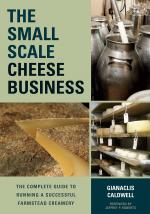
The Small-Scale Cheese Business: The Complete Guide to Running a Successful Farmstead Creamery

There has never been a better time to be making and selling great cheese. People worldwide are consuming more high- quality, handmade cheese than ever before. The number of artisan cheesemakers has doubled in recent years, and many of the industry’s newcomers are “farmstead” producers—those who work only with the milk of their own animals. Drawing from her own and other cheesemakers’ experiences, the author brings to life the story of creating a successful cheesemaking business in a practical, organized manner. Absolutely essential for anyone interested in becoming a licensed artisan cheesemaker, The Small-Scale Cheese Business will also appeal to the many small and hobby-farm owners who already have milking animals and who wish to improve their home dairy practices and facilities.

The Small-Scale Cheese Business

The Complete Guide to Running a Successful Farmstead Creamery

by Gianaclis Caldwell

There has never been a better time to be making and selling great cheese. People worldwide are consuming more high- quality, handmade cheese than ever before. The number of artisan cheesemakers has doubled in recent years, and many of the industry’s newcomers are “farmstead” producers—those who work only with the milk of their own animals. Today, more than ever before, the people who choose to become farmer- cheesemakers need access to the knowledge of established cheese artisans who can help them build their dream.
Few career choices lead to such extremes of labor, emotion, and monetary challenge. In The Small-Scale Cheese Business, (originally published as The Farmstead Creamery Advisor in 2010) respected cheesemaker, instructor, and speaker Gianaclis Caldwell walks would-be producers through the many, and often confusing, steps and decisions they will face when considering a career in this burgeoning cottage industry. This book fills the gap that exists between the pasture and cheese plate. It goes far beyond issues of caring for livestock and basic cheesemaking, explaining business issues such as:
  • Analyzing your suitability for the Description Prelim/Final Preliminary career;
  • Designing and building the cheese facility;
  • Sizing up the market;
  • Negotiating day-to-day obstacles;
  • Ensuring maximum safety and efficiency.
Drawing from her own and other cheesemakers’ experiences, Caldwell brings to life the story of creating a successful cheesemaking business in a practical, organized manner. Absolutely essential for anyone interested in becoming a licensed artisan cheesemaker, The Small-Scale Cheese Business will also appeal to the many small and hobby-farm owners who already have milking animals and who wish to improve their home dairy practices and facilities.
- See more at: http://www.chelseagreen.com/bookstore/item/the_smallscale_cheese_business:paperback#sthash.nz9gPWbV.dpuf

Wednesday, 30 April 2014

Live more on less (online)

There is no wealth but life: A practical action plan for living more on less.


We all understand the importance of reducing resource and energy consumption and stepping more lightly on the planet. But figuring out exactly how to do this in a consumer society can be very challenging.
The aim of this website is to provide a practical action plan for those people who wish to live a ‘simpler life’ of reduced and restrained consumption. The Simpler Way represents a life with less clutter, less waste, and less fossil fuel use, but also a life with more time for the things that truly inspire and bring happiness.

Wednesday, 16 April 2014

UN Special Rapporteur advocates agroecology (report)


(From The Guardian online). In his final report (pdf), Olivier De Schutter, UN special rapporteur on the right to food, offers a detailed critique of industrial agriculture that has boosted food production over the past 50 years, yet leaves 842 million – 12% of the world's population – hungry. As an alternative, he champions agroecology; both more environmentally friendly and contributing to improved nutrition. Other measures to improve the system would be to abandon mandates for biofuels and cut down food waste in rich countries and post-harvest losses in poor countries.

Tuesday, 15 April 2014

The Campaign for Real Farming (online)

Campaign for real farming website

'The Agrarian Renaissance needs new kinds of farms – polycultural, low-input, skills intensive; and these new farms need appropriate markets – generally local, and geared to the small-scale; and overall we need a true food culture – people who truly appreciate what good food is, and are prepared to seek it out.'
The mission statement of this website is reflected in its contents, and unlike many it is kept right up to date.

Monday, 31 March 2014

Transition towns in the majority world (journal)

How can the “transition paradigm” be implemented in poor communities in South Africa where most people are dependent on income from government grants? Here, the aim cannot be to have a transition to a lower consumption society; these societies are actually under-consuming. Rather, it is necessary to create settlements which are sustainable in almost every way: in terms of livelihoods, natural resources, energy and water usage, health and education, transport, and waste disposal. In this model, sustainable communities use the skills, assets and resources of their members to generate livelihoods. This paper observes three existing communities in South Africa with the objective of analysing how such models are integrated (or not) into the local economy. Thereafter aspects of a model that envisages ways that poor communities can create sustainable livelihoods, using local skills and resources, are presented. This model requires strategies for creating localised systems, including micro finance, local markets, com-munity exchange networks, cooperative construction, production and distribution systems; and infrastructure and technology systems.

Monday, 3 March 2014

Drivers of environmental change (report)

World in Transition – A Social Contract for Sustainability

In this report, the German Advisory council on Global Change explains the reasons for the desperate need for a post-fossil economic strategy, yet it also concludes that the transition to sustainability is achievable, and presents ten concrete packages of measures to accelerate the imperative restructuring. If the transformation really is to succeed, we have to enter into a social contract for innovation, in the form of a new kind of discourse between governments and citizens, both within and beyond the boundaries of the nation state. Factsheet 5 includes detailed descriptions of 'Drivers of Transformation', such as permaculture activists and transition towners

Tuesday, 25 February 2014

The latest news on climate change (website)

Responding to Climate Change

A great site that carries all the latest news on climate change politics, policy and science from around the world. Dozens of articles, with a good mixture of factual reporting and opinion stating, plus headlines and research reports.

Friday, 17 January 2014

The global food system analysed (book)

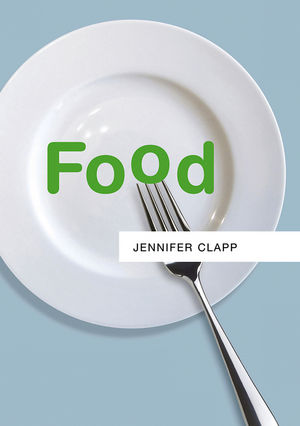
Food

Food is one of the most basic resources that humans need for daily survival. Forty percent of the world’s population gains a livelihood from agriculture and we all consume food. Yet control over this fundamental resource is concentrated in relatively few hands. At the same time, there are serious ecological consequences that stem from an increasingly industrial model of agriculture that has spread worldwide. But movements are emerging to challenge the dominant global system. The extent to which these alternative movements can displace it remains to be seen. This book aims to contribute to a fuller understanding of the forces that influence and shape the current global food system.

Tuesday, 22 January 2013

Twenty years on from Rio 1992 (book)

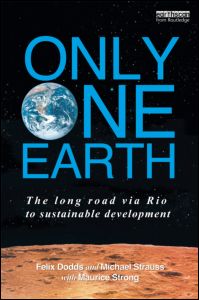
Only One Earth: TheLong Road via Rio to Sustainable Development 


This book will enable a broad readership to understand what has been achieved since the 1992 Rio Summit and what hasn’t. It reminds us of the planetary boundaries we must all live within and and what needs to be addressed for democracy, equity and fairness to survive.

Tuesday, 15 January 2013

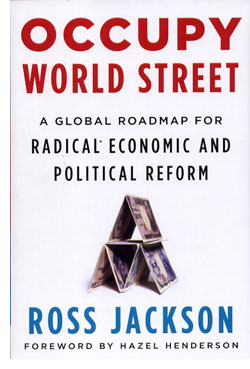
A global roadmap for economic reform (book)


An incisive description of the global financial practices that have driven economies to the brink of collapse, it puts forth a compelling plan to let nations regain control of their economies, reorganise human trade, and create institutions that uphold human rights and respect environmental standards.

Sharing for Survival (book)


Sharing for Survival - Restoring the Climate, the Commons and Society Brian Davey, £14.95


Sharing for Survival recognises that official climate policy is dominated by states in thrall to fossil fuel and financial lobbies. It offers a realistic radical way to rapidly reduce emissions through stabilising the economy and ensuring social justice. 

Future Money - Breakdown or Breakthrough? (book)


Future Money -Breakdown or breakthrough?

Future Money explains how our money system is propelling us toward the self-destruction of our species. It shows how the system operates and how it could be reformed so that it acts for the benefit of people and society, and describes the obstacles that currently prevent that reform.