Tuesday, 27 January 2015

Timber building design (book)


Sustainable Timber Design

This new resource covers the material selection, structural design and connections detailing of truly sustainable timber building. Historically there has been an imbalance between the availability of information on structural timber design and the much more widespread familiarity with traditional structural materials such as steel and concrete. This book aims to help redress the balance by presenting the essential design principles involved in the creation of elegant, user-friendly timber buildings that are practical, economic, and thoroughly sustainable. Designed to support specialist study into the benefits of 21st Century timber engineering, this book also offers architects, engineers and other construction professionals practical advice on all aspects of modern timber architecture.

Solar cities (book)

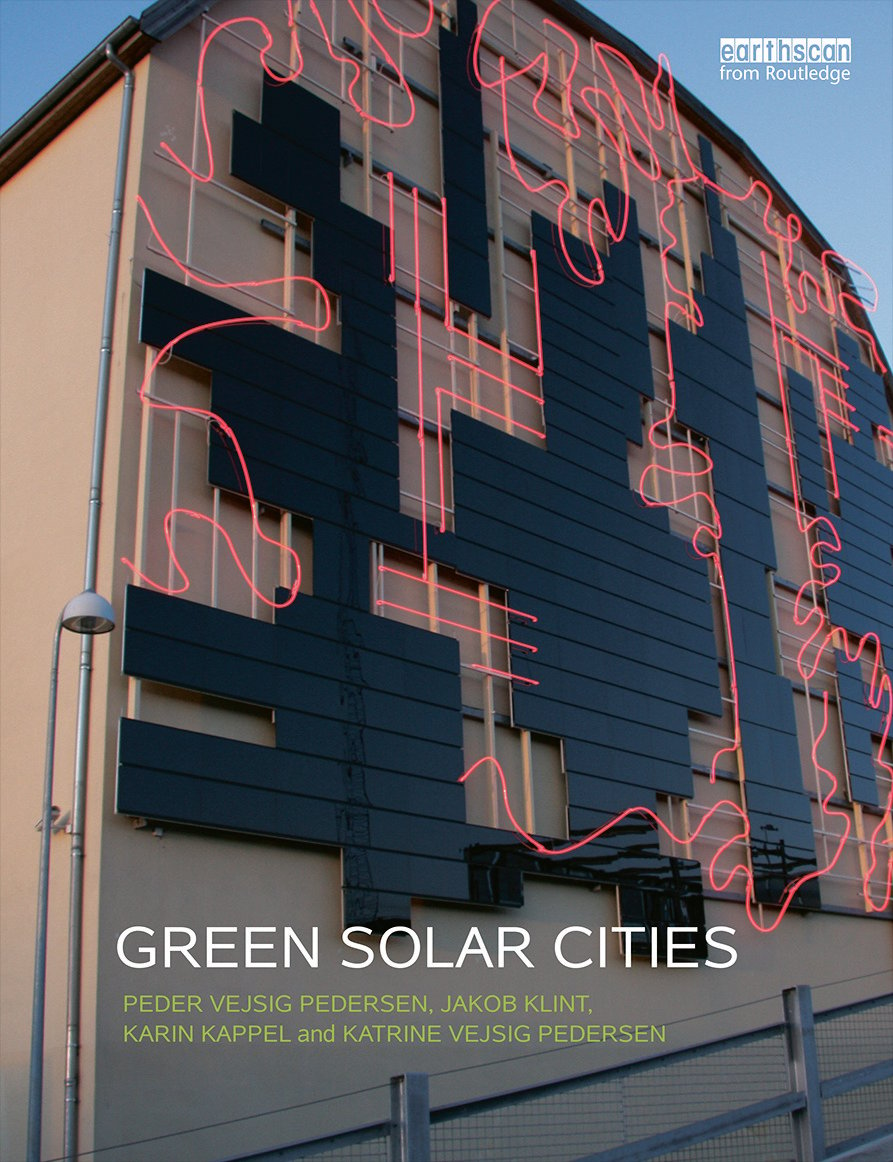
Green Solar Cities

The Green Solar Cities EU project focuses on the large scale implementation of solar energy technologies in combination with new build and retrofit low energy building in Copenhagen and Salzburg. This book will benefit those cities aiming at a "Smart City" development, but lacking clear policies of how to achieve that in practice. There is still a lack of understanding concerning how solar energy can play a major role and be combined with energy efficiency policies, use of district heating and combined heat and power. The general aim is to introduce the international "Active House" standard, connecting solar energy with low energy building and energy renovation.

Food sovereignty in context (book)

Food Sovereignty in International Context: Discourse, politics and practice of place

Food sovereignty is an emerging discourse of empowerment and autonomy in the food system with the development of associated practices. This book is a collection of empirically rich and theoretically engaged papers across a broad geographical spectrum reflecting on what constitutes the politics and practices of food sovereignty. They contribute to a theoretical gap in the literature as well as a relative shortage of empirical work on food sovereignty in the global "North"; specific case studies are included from Canada, Norway, Switzerland, southern Europe, UK and USA. The book offers a wide variety of empirical examples and a theoretically engaged framework for explaining the aims of actors and organizations working toward autonomy and democracy in the food system.
Coffee agroecology (book)

Coffee Agroecology: A New Approach to Understanding Agricultural Biodiversity, Ecosystem Services and Sustainable Development

This book focuses on the ecology of the coffee agroecosystem as a model for a sustainable agricultural ecosystem. It draws on the authors' own research conducted over the last twenty years and incorporates the vast literature that has been generated on coffee agroecosystems from around the world. Key concepts explored include biodiversity patterns, metapopulation dynamics and ecological networks. These are all set in a socioeconomic and political framework which relates them to the realities of farmers' livelihoods. The authors provide a novel synthesis that will generate new understanding and can be applied to other examples of sustainable agriculture and food production. This synthesis also explains the ecosystem services provided by the approach, including the economic, fair trade and political aspects surrounding this all-important global commodity.

Permaculture as counterculture (online)

Value the Edge: Permaculture as Counterculture in Australia

This paper considers permaculture as an example of counterculture in Australia. Rather than describing the history of permaculture, the authors choose two moments as paradigmatic of its evolution in relation to counterculture. The first moment is permaculture’s beginnings as part of the back to the land movement, coalescing around the publication in 1978 of Permaculture One by Mollison and Holmgren, which functioned as “a disruptive technology, an idea that threatened to disrupt business as usual". The second moment is best exemplified by the definition of permaculture as “also a world wide network and movement of individuals and groups working in both rich and poor countries on all continents” (Holmgren). We argue that the shift in understanding of permaculture from the “back to the land movement” to the contemporary conceptualisation of permaculture as a global network of practices, is representative of the shifting dynamic between dominant paradigms and counterculture from the 1970s to the present.

Australian aborigines and permaculture (online)

Indigenous Ecological Sustainability and the Role Permaculture Could Have in Maintaining a Healthy Aboriginal Community

There are many different reasons as to why there is such a divide in the living, social and health standards of Indigenous and non-indigenous Australians, but one reason however, seems to have had the greatest of impacts - the loss of traditional land practices. It is only recently that we have understood the intimate connection between Aboriginals, land and spirit and the deep understanding that their whole-of-life view directly contributed to their health and well-being. A fairly new design principle, permaculture, which seeks to integrate humans into a sustainable ecology, has the ability to re-connect Aboriginals to their land and spirit through social understanding and sustainable techniques and therefore, reconnect Aboriginals to their natural healthy ecosystem.

Wonderful worm compost! (#journal)

Humic substances from vermicompost enhance urban lettuce production

Urban agriculture represents about 20 % of Cuban agriculture. However, organic crop production in urban environments is challenging because of intensive plant nutrient requirements and disease incidence. The authors tested an innovative technology based on plant growth promoters isolated from vermicompost and applied directly to lettuce leaves. They applied liquid humates at 10, 15, or 20 mg C L−1 once at the seedling stage and again 15 days after transplantation. Results show that humates at 15 mg C L−1 shortened by 21 days the lettuce production cycle, allowing early harvesting without changing quality while increasing yields. Humate application also decreased total carbohydrate, increased protein, increased nitrate uptake, and stimulated enzyme production in lettuce leaves.