
Wednesday, 16 July 2014
Permaculture International Research Network launched!
The Permaculture International Research Network (PIRN) is launched!
This week The Permaculture Association is launching what we believe is the world's first Permaculture
International Research Network. Our first e-bulletin is going out to
around 400 permaculture researchers on Friday 18th July 2014. PIRN has three initial
activities; an e-bulletin issued six times a year, a facebook page,
and the international soil trials. Currently the network is in beta stage; the full
launch will take place in September 2015 at The International
Permaculture Convergence in London. Anyone involved
in permaculture research can join in the conversation on the facebook page; but if you want to actually
join PIRN (its free!) and receive the e-bulletin, please e-mail:
pirn@permaculture.org.uk

Organic food is better for you (journal)

This study analyzes 343 peer-reviewed publications that indicate
statistically significant differences in composition
between organic and non-organic crops/ foods. The concentrations of a range of antioxidants
were found to be substantially higher in organic crops. Many of these compounds have been linked to a reduced risk of chronic diseases
and certain cancers. Additionally, the occurrence of pesticide residues
was found to be four times higher in conventional crops, which also
contained significantly higher concentrations of the toxic metal cadmium. Significant differences were also detected for some other minerals and vitamins.
Scaling up agro-ecology (online)
Overcoming Obstacles to Agroecology

A half-century of research and practice in agroecology has
yielded spectacular results for hundreds of thousands of small scale farmers around the world. Because it
opens possibilities for grassroots food systems transformation, peasant
movements for food sovereignty have embraced agroecology, as have many
urban and organic farmers in the Global North. But despite its
documented benefits, agroecology is still largely limited to localized
experiences and a few, poorly funded university programs. The problem is
systemic. The solution is social and political, as discussed in this article from The Huffington Post.
Scientists call for agroecology research (online)
Scientists Call for Public Investment in Agroecological Research

Thursday, 10 July 2014
Manifesto for a new economy (book)
What Then Must We Do?
 Never before have so many
been frustrated with their economic system, more fearful that it
is failing, or more open to fresh ideas about a new one. The seeds of
a new movement demanding change are forming. But what is
this thing called a new economy, and how might it take shape? What Then Must We Do? suggests what the next system might look like: a system that is not corporate
capitalism, not state socialism, but something else entirely. The book calls for an evolution, not a
revolution, out of the old system and into the new which
would democratize the ownership of wealth, strengthen communities, and be governed by institutions
sophisticated enough to manage a large-scale, powerful economy. What
Then Must We Do? offers an elegant solution for moving from
anger to strategy.
Never before have so many
been frustrated with their economic system, more fearful that it
is failing, or more open to fresh ideas about a new one. The seeds of
a new movement demanding change are forming. But what is
this thing called a new economy, and how might it take shape? What Then Must We Do? suggests what the next system might look like: a system that is not corporate
capitalism, not state socialism, but something else entirely. The book calls for an evolution, not a
revolution, out of the old system and into the new which
would democratize the ownership of wealth, strengthen communities, and be governed by institutions
sophisticated enough to manage a large-scale, powerful economy. What
Then Must We Do? offers an elegant solution for moving from
anger to strategy.
What Then Must We Do?
What Then Must We Do?
Wednesday, 9 July 2014
The high cost of low prices (book)
Cheaponomics: The High Cost of Low Prices

Do
you really think you are getting a good deal when given that free
mobile phone for switching service providers, or by the fact that food is
cheaper today than ever before? Think again! This compelling
book clearly shows that cheapness is an illusion. The real cost of low prices is
alarmingly high, for example where consumers provide welfare support to poorly-paid workers, or rely on the exploitation of workers in poor
countries. Environmental pollution is paid for indirectly by people living
away from its source or by future generations. Even private cars, when properly costed, prove to
be an astronomically expensive model of transportation. The key point is that costs and risks are socialised: we all pay for cheapness, but not at the point of purchase.
Sustainabilty leadership in a perverse world (book)
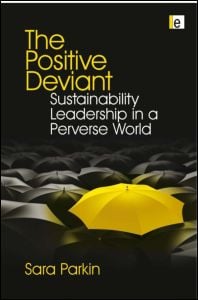
The Positive Deviant
An economy low in carbon and high in life satisfaction will require thousands, if not millions of exceptional leaders. This book is the first to bring together sustainability knowledge with the leadership skills and tools to help you become one of those leaders. In it you will find everything you need to get started straight away, and to grow your effectiveness, even in a world that remains perversely intent on the opposite.
Subscribe to:
Posts (Atom)