Monday, 30 June 2014

Healing the world with permaculture (#journal)
Feeding and healing the world: through regenerative agriculture and permaculture.
The study of soil is a mature science, whereas related practical methods of regenerative agriculture and permaculture are not. However, despite a paucity of detailed peer reviewed research published on these topics, there is overwhelming evidence both that the methods work and they may offer the means to address a number of prevailing environmental challenges. What is lacking is a proper scientific study, made in hand with actual development projects. By elucidating the scientific basis of these remarkable phenomena, we may obtain the means for solving some of the otherwise insurmountable problems confronting humanity, simply by observing, and working with, the patterns and forces of nature. This article is intended as a call to arms to make serious investment in researching and actualising these methods on a global scale. Permaculture and regenerative agriculture offer potentially the means to provide food and materials on the small scale, and may provide a crucial strategy in achieving a measured descent in our use of energy and other resources, rather than an abrupt collapse of civilization.Wednesday, 18 June 2014
Food movements as social networks (#journal)
The food movement in Canada: a social movement network perspective

State-facilitated land grabbing in Rwanda (#journal)
‘Control Grabbing’ and small-scale agricultural intensification: emerging patterns of state-facilitated ‘agricultural investment’ in Rwanda
Climate justice; rooted in historical oppression (#journal)
Climate justice: the claim of the past
 This appraisal of the collection of papers in this issue
argues that historical injustice saturates the problem of climate
change. Those most vulnerable to climate change today are largely those
who already lack resources – who have been on the wrong end of colonial
history, or who have been globalization's losers, or who have suffered
neglect, or exclusion at the hands of their own
governments. They are those who have benefited little or not at all
from a carbon-intensive global economy, but who have long suffered its
side effects. The paper notes that the particular form
taken by law in international and transnational affairs, having largely
followed the historical progress of industrialism, colonialism and
globalization, is peculiarly ill-suited to the task of addressing this
vulnerability.
This appraisal of the collection of papers in this issue
argues that historical injustice saturates the problem of climate
change. Those most vulnerable to climate change today are largely those
who already lack resources – who have been on the wrong end of colonial
history, or who have been globalization's losers, or who have suffered
neglect, or exclusion at the hands of their own
governments. They are those who have benefited little or not at all
from a carbon-intensive global economy, but who have long suffered its
side effects. The paper notes that the particular form
taken by law in international and transnational affairs, having largely
followed the historical progress of industrialism, colonialism and
globalization, is peculiarly ill-suited to the task of addressing this
vulnerability.
Climate change and human rights (#journal)
Climate ethics and human rights
Creating a small dairy business (book)
The Small-Scale Dairy includes everything you need to know in order to successfully produce nourishing, healthy, farm-fresh milk. Whether for home use, direct sale to the consumer, or sale to an artisanal cheesemaker, high- quality raw milk is a delicate, desirable product.
Applicable to keepers of cows, goats, or sheep, The Small-Scale Dairy offers a holistic approach that explores the relationships between careful, conscientious management and the production of safe, healthy, and delicious milk.
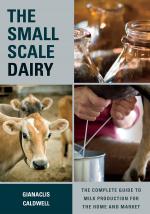
The
Small-Scale Dairy
The Complete Guide to Milk Production for the Home and Market - See more
at:
http://www.chelseagreen.com/bookstore/item/the_smallscale_dairy:paperback#sthash.5qZ4gfxu.dpuf
Subscribe to:
Posts (Atom)