Monday, 30 September 2013

The seven best permaculture-related journals?

Favourite agro-ecology journals for those interested in peer-reviewed science literature

To follow last week's tentative list of the ten best permaculture books, here is Rafter Sass Ferguson's suggestion for the seven best permaculture-related journals (Rafter's website is Liberation Ecology):
  • Agronomy for Sustainable Development
  • Agroecology and Sustainable Food Systems (formerly Journal of Sustainable Agriculture)
  • Renewable Agriculture and Food Systems
  • Agroforestry Systems
  • Agriculture, Ecosystems & Environment
  • Agriculture and Human Values
  • Journal of Agriculture, Food Systems, and Community Development
It would be good to get this list up to ten; I have a couple of ideas but does anyone have any additional suggestions? Leave a comment or drop me an e-mail.

A plan for zero carbon Britain (report)

Zero Carbon Britain: Rethinking the Future

Zero Carbon Britain draws on the Centre for Alternative Technology's 40 years of experience to create technically viable future scenarios. It brings together the latest knowledge from a wide range of disciplines, to explore synergies that create employment, increase well-being, have a positive impact on the economy, and future-proof us for the challenges of the 21st century. The report integrates new research in two key areas 'keeping the lights on' and 'feeding ourselves properly' on a low carbon diet. By combining cutting edge technology with a smart approach to agriculture and land use, energy supply and demand, buildings and transport, it is possible for the UK to meet the challenge of climate change.

Creating places for urban agriculutre (book)

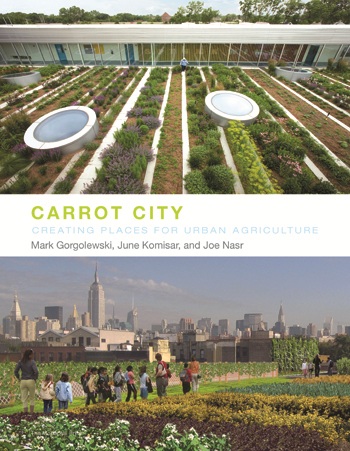
Carrot City: Creating Places for Urban Agriculture

Showcasing the best examples of current design, Carrot City presents strategies for reintroducing urban agriculture to our cities. Over forty innovative projects explore creative approaches to making space for urban food production, ranging from ambitious urban plans to simple measures for growing food at home. The authors show how city planning and architecture that considers food production as a fundamental requirement of design results in more community gardens, greenhouses tucked under raised highways, edible landscapes in front yards in place of resource-devouring lawns, walls that bring greenery into dense city blocks, and productive green roofs.

Wednesday, 25 September 2013

The ten best permaculture books? (on-line)

10 of the Top Permaculture Books

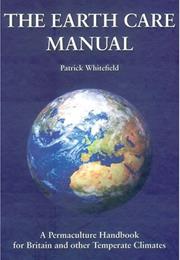
My colleague Alan Thornton has done a quick survey of people doing the UK Diploma in Applied Permaculture Design. Here are ten of their favourite permaculture books. The current favourite is The Earth Care Manual. Do you agree with their choices? Anything obvious missing? And how many of these have you read? The list might also give you some inspiration for your Christmas present list, or for a student reading list.

Tuesday, 24 September 2013

Should trees have legal rights? Special issue (#journal)

Journal of Human Rights and the Environment: Special Issue 'Should trees have standing?'

Nothing could be more urgent than the quest for ‘worlds other’ than the unsustainable status quo. Philosophical and jurisprudential engagement with questions of legal standing, of legal subjectivity and personhood, of legal ‘rights-bearers’, form an important part of the urgent search for an eco-humane future worthy of the name, for we live in a world pervasively structured by law's power to foreclose – or open – the ‘categories of the possible’ – a world in which law's intervention always has inescapably material effect. The rich contributions to this edition represent a fabulous meditation upon one of the most refreshing juridical re-imaginations of possible ‘worlds other’ to have emerged from legal scholarship in the past 40 years.

Property law and upland commons in England and Wales (#journal)

Property pluralism and the partial reflexivity of conservation law: the case of upland commons in England and Wales

Property is a relational concept. However the ways in which its relationality unfolds are multiple, as are its impacts on the conservation of nature. This article argues that property's relationality can be interpreted by reference to two distinct paradigmatic views: the first emphasizing its socio-legal relationality, the second focussing on property's ecological relationality. The first paradigm finds its justification in modern property law theory and culminates with a conceptualization of property as stewardship. The second paradigm, anchored in phenomenological thought, places the accent upon practices, movement and dwelling. It is argued here that UK conservation law operates with an understanding of property stemming uniquely from the first paradigm, yet the context it seeks to regulate is also permeated by the manifestation of ecologically embedded property. What counts as property is therefore contestable, and certain answers are marginalized by current conservation law. It is demonstrated that without acknowledgment of the presence of the two meanings of property, conservation law is unlikely to achieve full environmental effectiveness.

Is growth good for biodiversity? (on-line)

Is Growth Good for Biodiversity?

The Economist hosts a fascinating virtual debate, linked to a series of well-researched on-line articles and some perceptive comments. Lots of the arguments will no doubt confirm what you already think, but for the open-minded there is the chance to be challenged.