Showing posts with label planetary boundaries. Show all posts

Thursday, 21 August 2014

Zero Carbon Britian discussions (online)

Zero Carbon Britain discussion papers

The ZCB project has been encouraging contributors to write discussion papers to probe, ponder, reflect and imagine what a zero carbon Britain might be like.
We asked for their help to raise awareness of a more carbon responsible society, by looking at a diverse range of impacts of a zero carbon Britain. From faith groups to farmers, from restaurants to rugby teams, the aim is to get people talking about what it would be like to live in a world where we rise to our 21st century challenges.

Wednesday, 9 July 2014

Addressing water scarcity (book)

Chasing Water: A Guide for Moving from Scarcity to Sustainability

Water scarcity is spreading and intensifying in many regions of the world, with dire consequences for local communities, economies, and freshwater ecosystems. Current approaches tend to rely on policies crafted at the state or national level, which on their own have proved insufficient to arrest water scarcity. To be durable and effective, water plans must be informed by the culture, economics, and varied needs of affected community members. Chasing Water tells a cohesive  story that sustainable water sharing in the twenty-first century can only happen through open, democratic dialogue and local collective action.

Tuesday, 1 July 2014

Moving to sustainable eating habits (report)

Changing what we eat: A call for research & action on widespread adoption of sustainable healthy eating

Government leadership and substantial investment in research are needed to shift global consumption habits towards eating patterns that are both healthy and sustainable, say academics, industry and NGOs representatives in this report. Research is now needed in three key areas, say those involved in the report:
  • What are healthy sustainable eating patterns?
  • How do we eat now, why, and what are the health and sustainability implications?
  • How do we achieve positive change?
The report is based on the discussions of a workshop organised by the Food Climate Research Network, funded by the Wellcome Trust and the UK’s multi-agency Global Food Security programme.

Wednesday, 30 April 2014

Soil science and soil crisis (online)

Energy Balance

These blogs (by Professor Chris Rhodes) dated 22nd April and 6th April 2014 give a lovely introduction to the science of soil, and to the current crisis of soil, which all growers without a strong background in this area should read. It is a blog so perhaps a bit light for inclusion here, but contains so much great information that I thought it was worth it. Prof. Rhodes' older blog posts deal with a huge range of environmental issues (ranging from peak oil to home-made sauerkraut), many of which will be of interest to permaculture practitioners. 

Monday, 3 March 2014

Drivers of environmental change (report)

World in Transition – A Social Contract for Sustainability

In this report, the German Advisory council on Global Change explains the reasons for the desperate need for a post-fossil economic strategy, yet it also concludes that the transition to sustainability is achievable, and presents ten concrete packages of measures to accelerate the imperative restructuring. If the transformation really is to succeed, we have to enter into a social contract for innovation, in the form of a new kind of discourse between governments and citizens, both within and beyond the boundaries of the nation state. Factsheet 5 includes detailed descriptions of 'Drivers of Transformation', such as permaculture activists and transition towners

Thursday, 13 February 2014

We have enough to feed 10 billion (journal)

We Already Grow Enough Food for 10 Billion People … and Still Can't End Hunger

A stimulating and provocative  opinion piece from some of the leading figures in the agro-ecological movement, arguing that food production isn't an issue, instead we need to focus on inequality and food access. If we resolved those issues, and stopped pouring food crops into cars and livestock, we could feed everyone in the world using organic methods tomorrow.

Tuesday, 22 January 2013

Twenty years on from Rio 1992 (book)

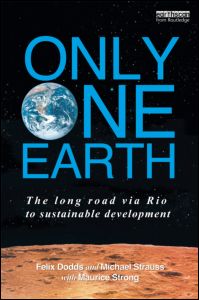
Only One Earth: TheLong Road via Rio to Sustainable Development 


This book will enable a broad readership to understand what has been achieved since the 1992 Rio Summit and what hasn’t. It reminds us of the planetary boundaries we must all live within and and what needs to be addressed for democracy, equity and fairness to survive.