We are no longer updating the Research Digest. All content remains.
The Permaculture Research Digest has summaries of newly published permaculture-related research. All items are
hyper-linked to the original publication.
The 'January 2013' archive contains 60 items published in 2012.
Items marked with a # have restricted public access, although abstracts are freely available.
Permaculture Research Digest
Wednesday, 30 May 2018
Friday, 25 May 2018
Microgreen/mushroom permaculture (journal)
Expanding Herbal Microgreen-Mushroom Permaculture Can Be an Efficient Way toRecycle Agricultural Waste While Treating and Feeding the World
A sustainable cycle of substrate utilization is beginning to manifest with plant waste being used as mushroom substrate, and spent (used) mushroom substrate being used in place of traditional soil, for herbal microgreen growth. This approach to efficiency and conservation an example of permaculture, or the development of agricultural ecosystems intended to be sustainable and self-sufficient.
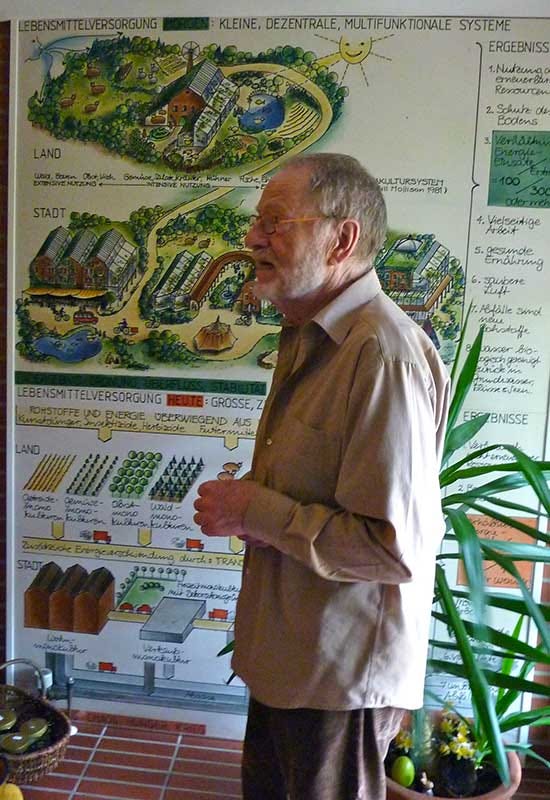
A vision for eco settlements (online)
A vision for Ecological Settlement Design (by Declan & Margrit Kennedy)
Margrit and Declan Kennedy spend their lives as activists, architects, academics and pioneers in the permaculture, ecovillage and alternative currency movements. This qualifies them as exemplary trans-disciplinary whole systems thinkers, designers, and doers. They are co-founders of the ecovillage Lebengarten in Germany, while working as professors of architecture and urban planning in Berlin, they also taught the first permaculture courses in Europe. Here is their whole systems vision of ecological design for sustainable communities.
Thursday, 17 May 2018
The urgency of climate action (online)
Three Things We Don’t Understand About Climate Change
Thinking
about climate change is not something that comes natural to humans — or
‘consumers’ as we have been called for decades. It is not only
emotionally unpleasant, but analytically extremely challenging. Most of us do not grasp how immediate this situation has
become, how fast it is progressing and what the scale of change needed
is. After individuals, nations and corporations understand
the urgency and the rate, they should be honest about the scale of
action needed in order to avoid collapse of the biosphere and thus
civilisation.
Wednesday, 18 April 2018
UK farmers who meet the sustainability challenge (report)
New report with aim to investigate how the science of agroecology can play a central role in the way our green and pleasant land is managed in the future.
A new report commissioned by the Land Use Policy Group and funded by Scottish Natural Heritage has taken a unique approach to help UK farmers meet the sustainability challenge by using the experiences of farmers that have ‘redesigned’ their farming systems utilising natural resources, such as clover grass leys in the crop rotation, to secure a healthier future for the environment and their businesses.
The aim was to investigate how the science of agroecology can play a central role in the way our green and pleasant land is managed in the future.
Analysing the practical experiences of a group of farmers from Scotland, England and Wales the report aims to unravel farmer expectations, risks and opportunities to help form future policy in the UK based on agroecological farming practices.
The group of fourteen farmers involved in the study were quite diverse and wide ranging – from small scale to large commercial enterprises with on-farm approaches covering agroforestry, pasture-fed livestock systems, organic and integrated farming with direct drilling and/or integration of livestock in arable operations.
The report has recommendations for further action to support agroecology, including the need to develop a support programme to facilitate the transition towards more sustainable farming systems.
A new report commissioned by the Land Use Policy Group and funded by Scottish Natural Heritage has taken a unique approach to help UK farmers meet the sustainability challenge by using the experiences of farmers that have ‘redesigned’ their farming systems utilising natural resources, such as clover grass leys in the crop rotation, to secure a healthier future for the environment and their businesses.
The aim was to investigate how the science of agroecology can play a central role in the way our green and pleasant land is managed in the future.
Analysing the practical experiences of a group of farmers from Scotland, England and Wales the report aims to unravel farmer expectations, risks and opportunities to help form future policy in the UK based on agroecological farming practices.
The group of fourteen farmers involved in the study were quite diverse and wide ranging – from small scale to large commercial enterprises with on-farm approaches covering agroforestry, pasture-fed livestock systems, organic and integrated farming with direct drilling and/or integration of livestock in arable operations.
The report has recommendations for further action to support agroecology, including the need to develop a support programme to facilitate the transition towards more sustainable farming systems.
Wednesday, 14 March 2018
Key questions for restoring degraded ecosystems (journal)
One hundred priority questions for landscape restoration in Europe
Free open access until 3rd May 2018
Scientists and researchers outline the key questions that we need to answer to ensure restoration of marine and terrestrial landscapes in Europe is as effective as possible.
Ecological restoration is the process of assisting or allowing the recovery of an ecosystem that has been degraded, damaged, or destroyed. It is an increasingly important element in strategies aimed at reducing biodiversity loss and reversing declines. It is especially relevant in the intensively managed, farmed, urbanised and industrialised landscapes common in Europe.
The questions are usefully divided into eight sections:
- conservation of biodiversity;
- connectivity, migration and translocations;
- delivering and evaluating restoration;
- natural processes;
- ecosystem services;
- social and cultural aspects of restoration;
- policy and governance; and economics
The growing research effort investigating larger-scale ecological processes and connectivity (such as the needs of migratory species, the impacts of climate change on species' ranges, and the need to restore ecosystem function) is increasingly focusing attention on large or landscape-scale conservation and restoration. The questions presented in this paper highlight areas where this research could usefully be focused, in order to ensure that restoration projects are carried out in the most appropriate locations, using the best methods and effectively including all stakeholders, in order to maximise their success.
Wednesday, 28 February 2018
Regen ag for profit and biodiversity (journal)
Regenerative agriculture: merging farming and natural resource conservation profitably
Most cropland in the United States is characterized by large monocultures, whose productivity is maintained through a strong reliance on costly tillage, external fertilizers, and pesticides. Despite this, farmers have developed a regenerative model of farm production that promotes soil health and biodiversity, while producing nutrient-dense farm products profitably. When evaluated, regenerative farming systems provided greater ecosystem services and profitability. Pests were 10-fold more abundant in insecticide-treated corn fields, and although regenerative fields had 29% lower grain production they had 78% higher profits over traditional corn production systems.
Subscribe to:
Posts (Atom)