In most Africa countries, cooking is a dirty and
time-consuming job that involves fuel such as
wood, charcoal, or coal for a fire. Globally, some 500 million
households, with more than 70% in Africa, depend on burning solid fuel to
meet their cooking, heating and lighting needs. There is an urgent need
to investigate more efficient cook stove technologies that have very
minimal or no impact on the environment and households. In this study,
an improved mud-brick cook stove was designed and tested in a typical
family house in Cameroon. To ensure the acceptability and sustainability
of the technology, the rural dwellers were involved in the design and
implementation. The performance of the stove was compared with that of
traditional 3-stone fireside. The mud-brick cook stove construction
materials are available in communities that have clay soil and can be
made using limited tools.
Wednesday, 13 January 2016

Post-doc opportunity at Surrey Uni
Post-Doc opportunity to study community bio-gas at Surrey University
Surrey University are looking for someone for a 3 year post doc on an EU project - Enhancing Sustainable Biogas Communities through Social Innovation.
It involves working with stakeholders in the Humber region UK to promote community innovation for sustainable biogas production. Collaborating with local bioeconomy and social innovation NGOs and SMEs in the Humber and with projects in Greece and Germany. It needs someone who can get the job done on the ground working with stakeholders, who is into community innovation and renewables/bio-economy and who is a whole systems thinker and able and interested in using new tools from complexity science, participatory modelling and social media-based collaborative platforms. Although permaculture is not mentioned by name, a permaculturalist with a suitable academic background would be ideal.
Tuesday, 5 January 2016
Support or sponsor The Digest for 2016!
Support or sponsor The Digest for 2016!
Why not make supporting the Permaculutre Research Digest your New Year resolution for 2016? The Digest currently receives no external financial support of any kind. If it is to survive and thrive in 2016 it needs whatever support you can give. Please donate by clicking on the green bar above. If you are interested in sponsoring The Digest, please email research@permaculture.org.uk to discuss the possibilities.
Why not make supporting the Permaculutre Research Digest your New Year resolution for 2016? The Digest currently receives no external financial support of any kind. If it is to survive and thrive in 2016 it needs whatever support you can give. Please donate by clicking on the green bar above. If you are interested in sponsoring The Digest, please email research@permaculture.org.uk to discuss the possibilities.
Climate change artists wanted (online)
Climate Change in Residence: Future Scenarios
The organisation Culture and Climate Change are seeking three artists to take part in a new form of arts residency, offering access to a network of climate change researchers across the UK. Each residency includes an award of £10,000. They welcome applications from individuals and collectives from any artform to work on new creative projects engaging with scenarios of climate change. APPLY NOW to be artist in residence.
The organisation Culture and Climate Change are seeking three artists to take part in a new form of arts residency, offering access to a network of climate change researchers across the UK. Each residency includes an award of £10,000. They welcome applications from individuals and collectives from any artform to work on new creative projects engaging with scenarios of climate change. APPLY NOW to be artist in residence.
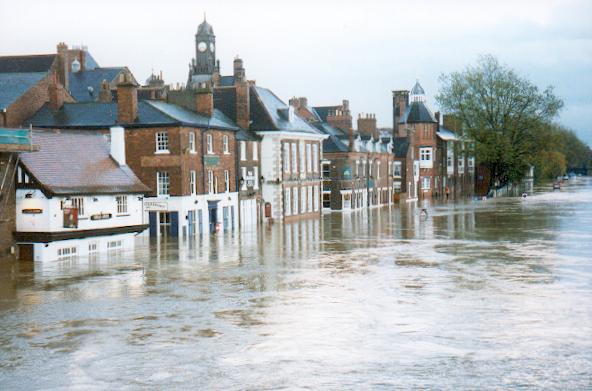
Solve the UK floods with permaculture (online)
Analysis of participation in permaculture (journal)
Grassroots engagement with transition to sustainability: diversity and modes of participation in the international permaculture movement
This article analyzes an international survey of 731 permaculture participants, and assesses the socio-demographic characteristics of the movement. The survey examined self-identified roles of permaculture participants and explored the relationships between those roles and socio-demographic factors race, gender, and socioeconomic status. Results showed the participation of women at or above parity (53%), while participation by race showed a white supermajority (96%). Multivariate regression demonstrated that race, gender, and socioeconomic status are shaping participation in distinct ways and that each interact with structural factors. Results point toward a theoretical framework that identifies multiple levels and sites through which socio-demographic factors shape participation in grassroots environmental action, and the outlines of such a framework are discussed.
This article analyzes an international survey of 731 permaculture participants, and assesses the socio-demographic characteristics of the movement. The survey examined self-identified roles of permaculture participants and explored the relationships between those roles and socio-demographic factors race, gender, and socioeconomic status. Results showed the participation of women at or above parity (53%), while participation by race showed a white supermajority (96%). Multivariate regression demonstrated that race, gender, and socioeconomic status are shaping participation in distinct ways and that each interact with structural factors. Results point toward a theoretical framework that identifies multiple levels and sites through which socio-demographic factors shape participation in grassroots environmental action, and the outlines of such a framework are discussed.
Permaculture: regenerative, not just sustainable (journal)
Permaculture: regenerative, not merely sustainable
 Permaculture has a value-added factor that extends beyond what might be merely maintained or sustained, which is the quality of 'regeneration'. All sustainable solutions are unsustainable over the longer term, if they are not also intrinsically regenerative. The word “regenerative” means “the capacity to bring into existence again”; hence, if an item or system is regenerative, it has the inherent capacity to bring itself into existence once more. To achieve this for a completely artificial system is a challenge. Nature offers the ultimate example of a design that is both sustainable and regenerative, and it is logical to appeal to natural principles for solutions to many of our current problems. Within a broader perspective of regenerative design, permaculture identifies the elements of sustainable living which are harmonious with nature.

Subscribe to:
Posts (Atom)