Friday, 17 January 2014

The global food system analysed (book)

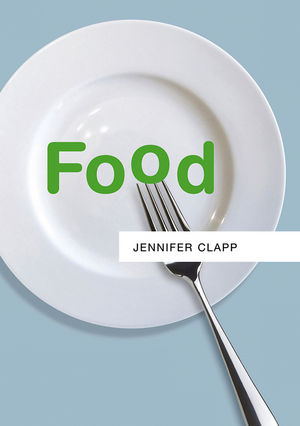
Food

Food is one of the most basic resources that humans need for daily survival. Forty percent of the world’s population gains a livelihood from agriculture and we all consume food. Yet control over this fundamental resource is concentrated in relatively few hands. At the same time, there are serious ecological consequences that stem from an increasingly industrial model of agriculture that has spread worldwide. But movements are emerging to challenge the dominant global system. The extent to which these alternative movements can displace it remains to be seen. This book aims to contribute to a fuller understanding of the forces that influence and shape the current global food system.

Peasant farming is more energy efficient (#journal)

The EROI of agriculture and its use by the Via Campesina

Via Campesina supports peasant and small farmer agriculture both in the South and in the North. Its basic doctrine is that of ‘food sovereignty’. Among the analytical tools used by this international peasant movement is the comparison between the energy efficiency of traditional small farm agriculture and modern industrial agriculture. This article looks at the use of the concept of EROI (energy return on energy input) by Via Campesina when it claims that ‘industrial agriculture is no longer a producer of energy but a consumer of energy’, and that ‘peasant agriculture cools down the Earth’.

Wednesday, 18 December 2013

Creating sustainable neighbourhoods (book)

The Hidden Potential of Sustainable Neighbourhoods: Lessons from Low-Carbon Communities

How do you achieve effective low-carbon design beyond the building level? How do you create a community that is both livable and sustainable? More importantly, how do you know if you have succeeded? Harrison Fraker goes beyond abstract principles to provide a clear, in-depth evaluation of four first generation low-carbon neighborhoods in Europe, and shows how those lessons can be applied to the U.S. The four case studies are: Bo01 and Hammarby in Sweden, and Kronsberg and Vauban in Germany. Each was built deliberately to conserve resources: all are mixed-used, contain at least 1,000 units, and have aggressive goals for energy and water efficiency, recycling, and waste treatment.

Stories of enviromental mediation (book)

Common Ground on Hostile Turf: Stories from an Environmental Mediator

In our increasingly polarized society, there are constant calls for compromise, for coming together. For many, these are empty talking points—for Lucy Moore, they are a life's work. As an environmental mediator, she has spent the past quarter century resolving conflicts that appeared utterly intractable. Here, she shares the most compelling stories of her career, offering insight and inspiration to anyone caught in a seemingly hopeless dispute.

Transport beyond oil (book)

Transport Beyond Oil: Policy Choices for a Multimodal Future 

Seventy percent of the oil America uses each year goes to transportation. That means that the national oil addiction and all its consequences, from climate change to disastrous spills to dependence on foreign markets, can be greatly reduced by changing the way we move. In Transport Beyond Oil, leading experts in transportation, planning, development, and policy show how to achieve this fundamental shift. The authors demonstrate that smarter development and land-use decisions, paired with better transportation systems, can slash energy consumption.

Empathic green building design (book)

Design for an Empathic World: Reconnecting People, Nature, and Self

Despite an uncertain economy, the market for green building is exploding. The US green building market has expanded dramatically since 2008 and is projected to double in size by 2015. But green-building pioneer Sim Van der Ryn says, “greening” our buildings is not enough.  He advocates for “empathic design”, in which a designer not only works in concert with nature, but with an understanding of and empathy for the end user and for ones self.  It is not just one of these connections, but all three that are necessary to design for a future that is more humane, equitable, and resilient.

Bokashi Composting (book)

Bokashi Composting: Scraps to Soil in Weeks

Bokashi is Japanese for "fermented organic matter." Bokashi composting is a safe, quick, and convenient way to compost in your kitchen, garage, or apartment, using a specific group of microorganisms to anaerobically ferment all food waste (including meat and dairy). Since the process takes place in a closed system, insects and smell are controlled, making it ideal for urban or business settings. The process is very fast, with compost usually ready to be integrated into your soil or garden in around two weeks. While bokashi has enjoyed great popularity in many parts of the world, it is still relatively unknown in North America. From scraps to soil, Bokashi Composting is the complete, step-by-step, do-it-yourself guide to this amazing process.